Physical Address
304 North Cardinal St.
Dorchester Center, MA 02124
Physical Address
304 North Cardinal St.
Dorchester Center, MA 02124

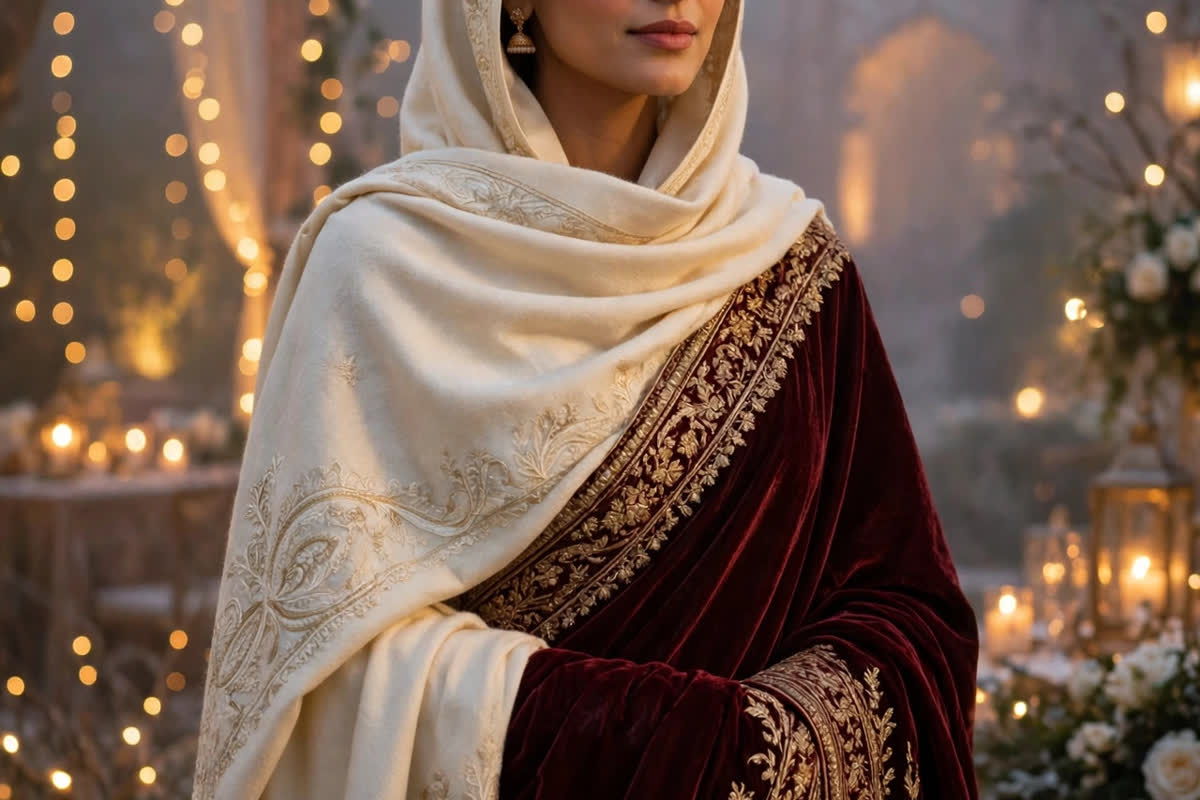
A saree in winter sounds brave — in Pakistan, it is one of the most elegant choices you can make. When the fog rolls in over Lahore and the wedding halls turn chilly after sunset, a well-styled winter saree looks regal, stays warm, and photographs beautifully under fairy lights. The secret is choosing the right fabric, the right blouse, and the right shawl.
Sarees have quietly returned to Pakistani wedding wardrobes.
Heavy fabrics fall better, hold their pleats longer, and drape with a weight that looks expensive. A velvet saree in January looks intentional.
A saree gives you more control over warmth than a lehenga: add a full-sleeve blouse, a thermal layer, a pashmina shawl and warm footwear — nobody sees the layers, only the drape. That matters because winter venues are often semi-outdoor: marquees, lawns, rooftops. The woman in sleeveless chiffon is shivering by 9 pm; the woman in velvet with a shawl is still dancing.
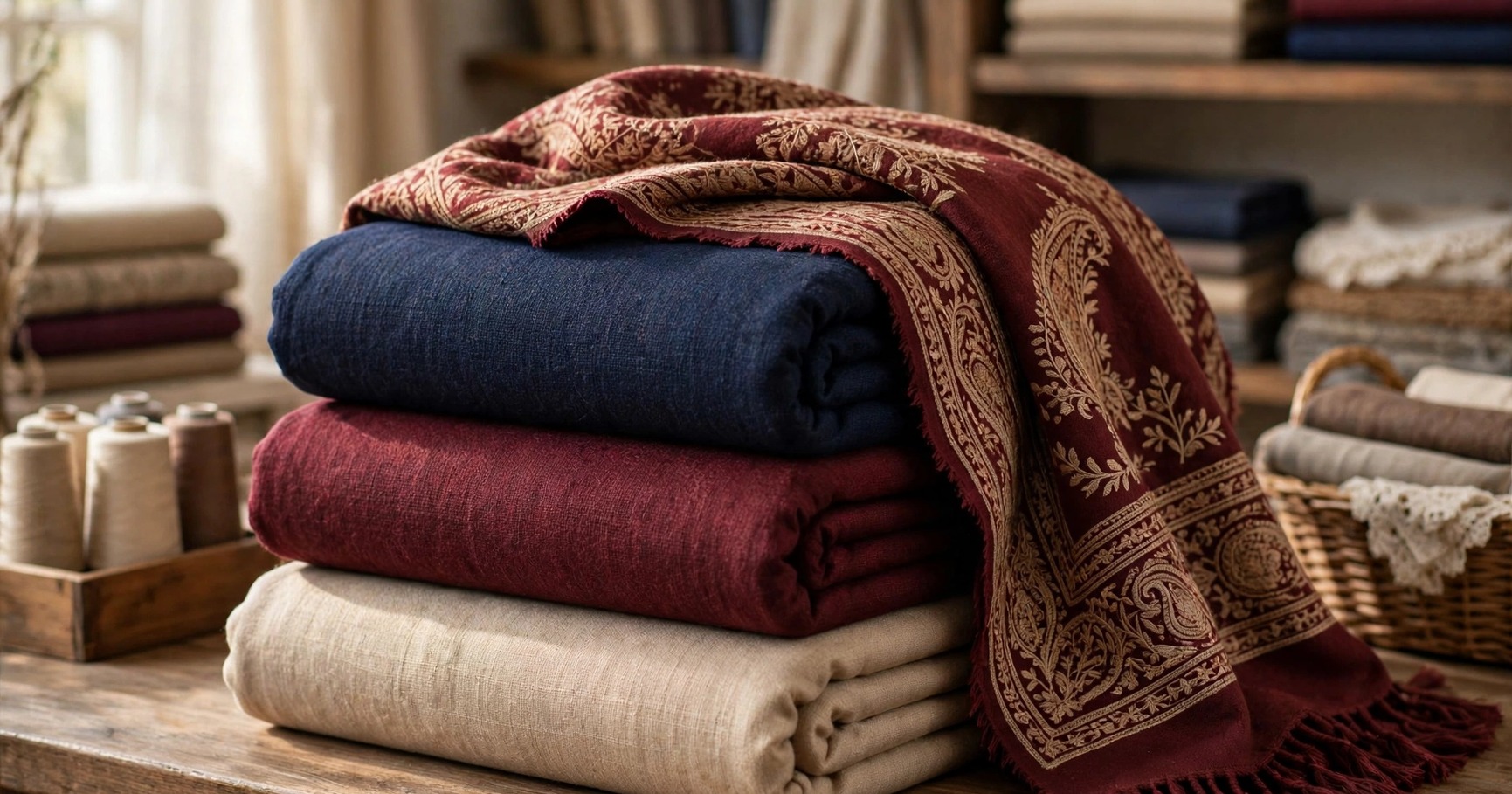
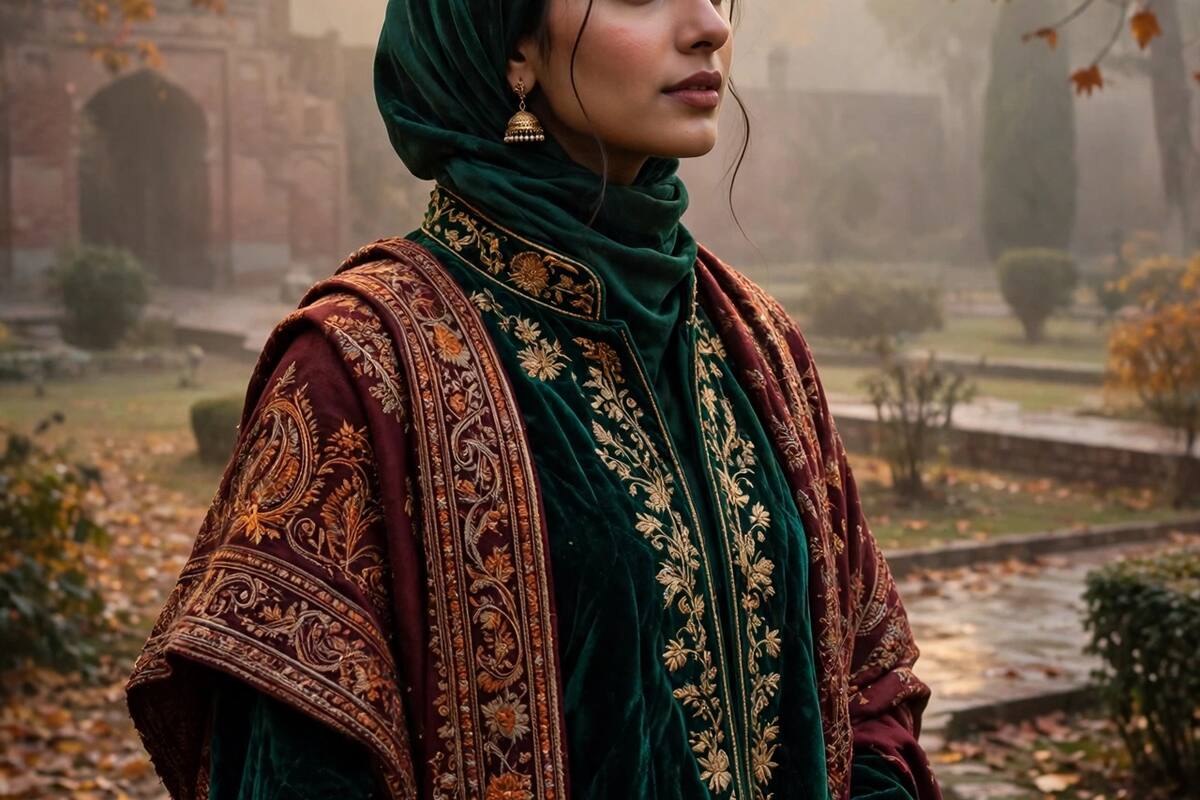
Velvet. A deep maroon, navy or emerald velvet saree with gold zari looks made for a December valima. Ready-made velvet sarees in Pakistan typically range from Rs 8,000 to Rs 25,000. For more on velvet as a winter wedding fabric, see our guide to velvet dresses for winter weddings.
Silk. Raw silk, jamawar and katan silk all have enough body to drape well in cold weather and pair beautifully with a shawl. A jamawar silk saree suits a nikkah; a plain raw silk saree with a heavy border suits a wedding guest. Ready-made silk sarees generally range from Rs 6,000 to Rs 20,000.
Heavy georgette and lined chiffon. If you love chiffon’s flow but hate the cold, choose a heavy georgette or lined chiffon saree. The lining adds warmth and weight, so it drapes better in a winter breeze — pair it with a velvet blouse.
Brocade and banarasi. Their dense weave and gold threadwork catch the light at evening events — a banarasi saree in a deep colour with a contrasting border suits a mother of the bride or groom. These are investment pieces, usually Rs 10,000 to Rs 30,000.
Fabrics to avoid. Very thin, unlined chiffon and organza offer no warmth and slip constantly. Net sarees are beautiful in pictures but cold over winter layers — wear them only indoors, with a full-sleeve velvet blouse and a heavy shawl.
The shawl turns a saree from a summer outfit into a winter outfit. These styles work:
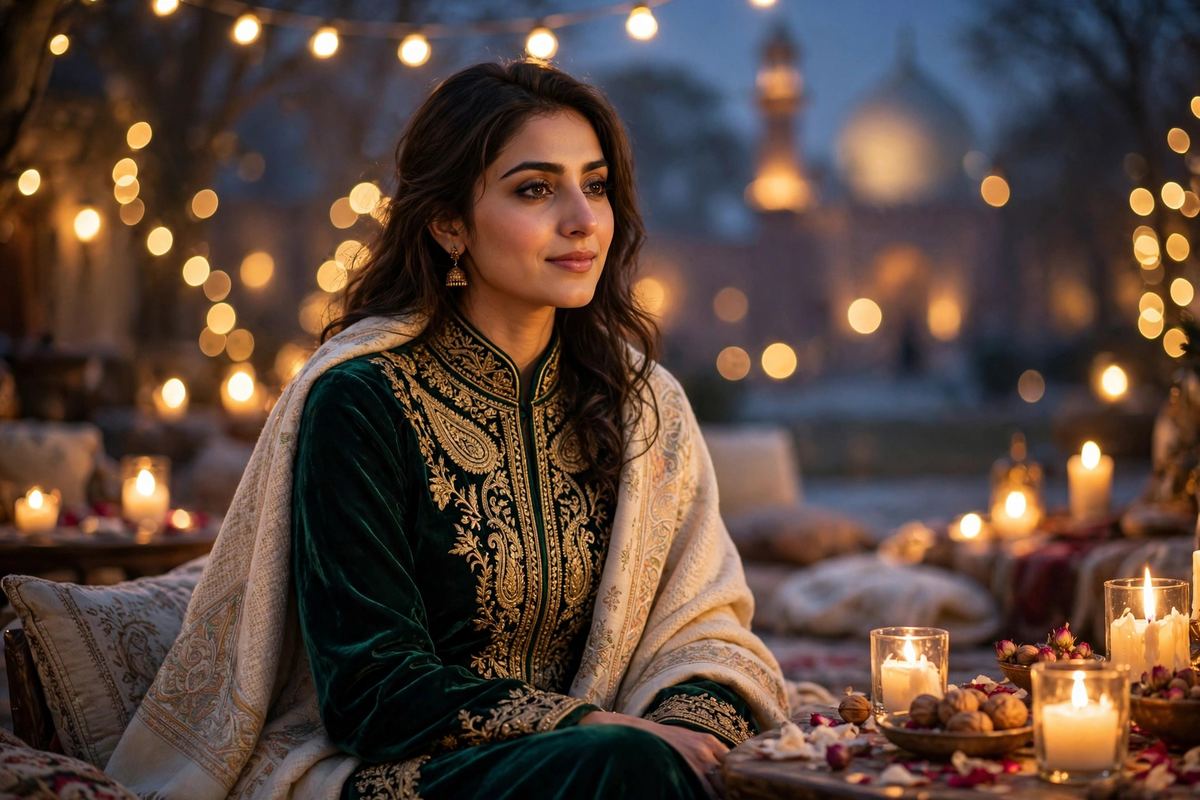
1. The classic pallu over the shawl. Drape your saree normally, then place a pashmina shawl over your shoulders on top of the pallu. It is the easiest and warmest method — choose a contrasting colour, like cream pashmina over maroon. For detailed pashmina ideas, see our guide on how to style a pashmina shawl.
2. The shawl as a pallu. Use a heavily embroidered shawl as the pallu: drape it over one shoulder, pin it at the waist, and let the border fall like a pallu. Best with a plain velvet or silk saree.
3. The belted shawl drape. Secure the shawl at the waist with a thin metallic belt or kamarbandh. It stops slipping, defines your waist, and photographs elegantly.
4. The dupatta-style drape. If a full shawl feels too heavy, drape a long wool or pashmina dupatta across the chest and over one shoulder. Our winter dupatta styling guide has ten draping ideas that transfer easily to sarees.
Pinning tips: Use large safety pins — winter fabrics are heavy and small pins slip. Pin the pallu at the shoulder and the pleats at the waist, and carry two spares. Fashion tape stops the pallu sliding on silk and velvet.
The blouse makes or breaks a winter saree:
Avoid very low necklines and backless blouses in winter unless the venue is fully indoor and heated. You will spend the evening pulling your shawl up, and the photographs will show it.
Nikkah. Choose soft colours — ivory, blush pink, mint, or pale gold silk — with a matching pashmina shawl and minimal jewellery.
Mehndi. This is the one event where you can be bold: a bright yellow, orange or green saree in heavy silk or velvet, a contrasting shawl, and flat footwear — mehndi means hours on your feet.
Barat. The most formal night: a deep maroon, navy or emerald velvet or brocade saree with heavy gold work, a full-sleeve embroidered blouse, and a matching shawl. Add a statement necklace or heavy jhumkas, and closed-toe shoes — khussay or a low heel.
Valima. Valima styling is softer and more regal: pastels — dusty pink, powder blue, sage green — in silk or heavy georgette with a fine shawl. A lighter saree here balances a dark barat look.
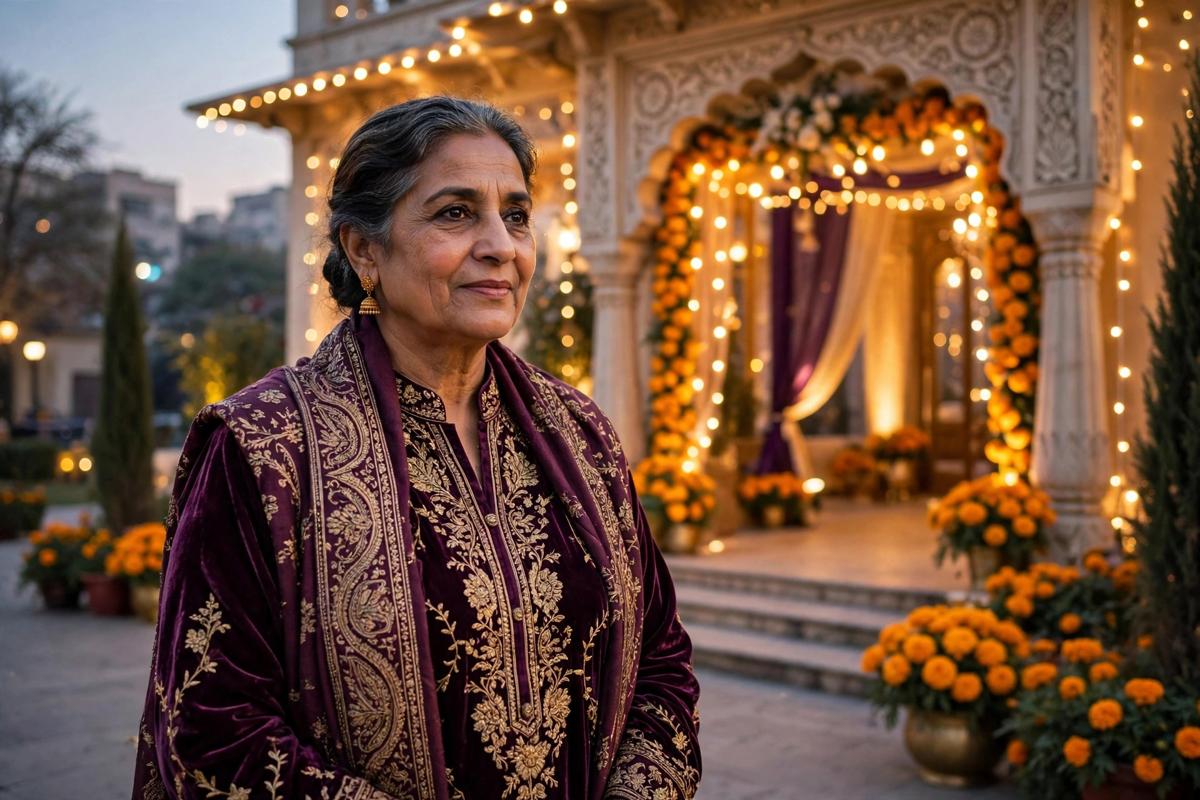
As a wedding guest. A silk or velvet saree in any jewel tone, with a shawl and simple gold jewellery, is always appropriate. Avoid white, ivory, or anything that could be mistaken for the bride’s. For more guest outfit ideas, see our guide to winter wedding guest outfits.
Winter light in Pakistan flatters deep, rich colours. The safest palette is jewel tones: maroon, emerald green, navy blue, deep plum, and burnt orange. Pastels suit daytime events and valimas — dusty pink, powder blue, mint and lavender look fresh with a darker shawl. Metallics help too: gold zari on maroon, silver on navy, copper on emerald catch the fairy lights.
Match jewellery to the saree’s weight: a heavy velvet saree calls for a statement piece — a kundan choker or large jhumkas — while a lighter silk saree suits delicate gold and small studs. Pearls suit winter pastels; polki and kundan suit deep jewel tones. Heavily embroidered saree? Keep jewellery simple. Plain saree? Let the jewellery lead.
Winter makeup must survive cold air and long hours: use a moisturising primer and long-wear foundation. A bold lip — deep red, maroon or plum — is the classic winter saree look, paired with soft eye makeup and a low bun. A low bun is practical with a shawl, since loose hair tangles in the fringe.
Repurpose a plain saree with a new blouse and a good shawl — a plain maroon silk saree looks entirely new with a velvet embroidered blouse and a contrasting pashmina shawl, usually Rs 3,000 to Rs 8,000 together. Buy unstitched fabric and get it stitched — often half the price of a ready-made designer saree, with a better fit. Rent for one event — rental shops in Lahore, Karachi and Islamabad offer designer sarees for typically Rs 5,000 to Rs 15,000 per event. Invest in one good shawl — a quality pashmina or embroidered wool shawl costs Rs 3,000 to Rs 10,000 and transforms every saree you own, winter after winter. Shop the sales — winter sales in November and December bring discounts of 20 to 50 percent.
Mistakes to avoid: a thin, unlined saree outdoors; a sleeveless blouse at night; a slipping shawl — pin it at shoulder and waist; open-toe shoes in December; embroidery, jewellery and shawl all competing — pick one statement piece; no thermal layer; and ironing velvet directly — use a steamer instead.
Dry-clean velvet, silk and brocade sarees — never machine-wash them. Store them folded with muslin cloth between the folds, not hanging: heavy fabrics stretch on hangers. Keep pashmina shawls in a breathable cotton bag with neem leaves or cedar blocks against moths. Air sarees out after each wearing, and never store a damp shawl.
Can I wear a saree to a Pakistani winter wedding as a guest?
Yes — sarees are completely appropriate for wedding guests. Choose a silk or velvet saree in a jewel tone, add a shawl, and avoid anything that could rival the bride’s outfit.
Which saree fabric is warmest for winter?
Velvet, followed by brocade and heavy silk. A velvet saree with a full-sleeve blouse and a pashmina shawl is the warmest combination.
How do I keep a saree from slipping in winter?
Use strong safety pins at the shoulder and waist, double-sided fashion tape on the blouse, and a belt or kamarbandh to secure a shawl. Heavy fabrics slip less than thin chiffon.
Can I wear a saree with a coat?
Yes — a long wool coat over a saree is stylish and practical for travelling to a winter wedding. Remove it indoors. A neutral coat — camel, black or navy — goes with any saree.
Is a saree suitable for a winter nikkah?
Absolutely. A soft silk or jamawar saree in a light colour with a delicate shawl is a graceful nikkah look — keep embroidery and jewellery understated.
A winter saree is not a compromise — it is one of the best-dressed choices at a Pakistani wedding. The fabrics are richer, the colours deeper, and the shawl that keeps you warm is the accessory that makes the outfit. Choose a velvet or silk saree in a jewel tone, a full-sleeve blouse, and a good pashmina shawl. Start with one good saree and one good shawl; winter after winter, they pay for themselves.