Physical Address
304 North Cardinal St.
Dorchester Center, MA 02124
Physical Address
304 North Cardinal St.
Dorchester Center, MA 02124

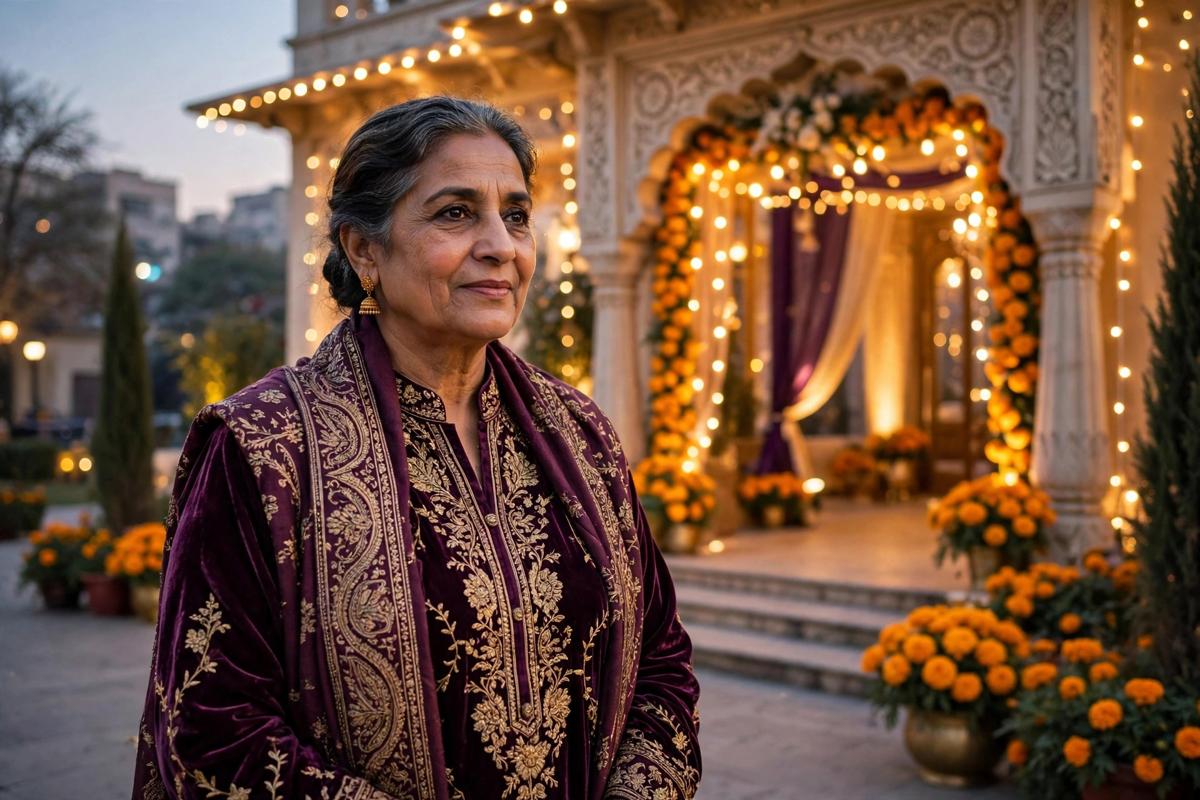
A Pakistani wedding is a family celebration, and at the centre of it — right beside the bride and groom — stands the mother. She greets every guest, hosts every function, and appears in almost every family photograph. Yet her own outfit is often the last thing anyone thinks about: the bride’s dress is chosen months in advance, and the mother ends up rushing to the tailor a week before the barat. This winter, that does not have to happen — the 2026 season offers beautiful options in velvet, silk, jamawar and pashmina.
A mother’s wedding outfit has a different job from any other guest’s. She is on her feet for hours — welcoming relatives, sitting with the bride, and standing for photographs. In a Pakistani winter, evening functions get genuinely cold, and a sleeveless or unlined chiffon outfit that looked fine in the shop becomes miserable by midnight.
Comfort is therefore the first rule: choose silhouettes you can sit, stand and walk in easily — a long shirt with straight trousers, a well-fitted angrakha, or a saree with a neatly pinned pallu. Heavy lehengas with stiff cancan are the wrong choice for a mother who will be busy all evening. The second rule is dignity of design: rich and refined, without competing with the bride. The third is warmth built into the outfit. Our winter wedding guest outfits guide covers the same balance of elegance and comfort for every guest.
Colour choice for a mother is both a style decision and a matter of etiquette. The bride traditionally wears red or deep maroon on the barat, so mothers usually avoid exact bridal red on that day — deep maroon is fine for other functions, but on the barat itself, choose a colour that photographs beautifully beside the bride without matching her.
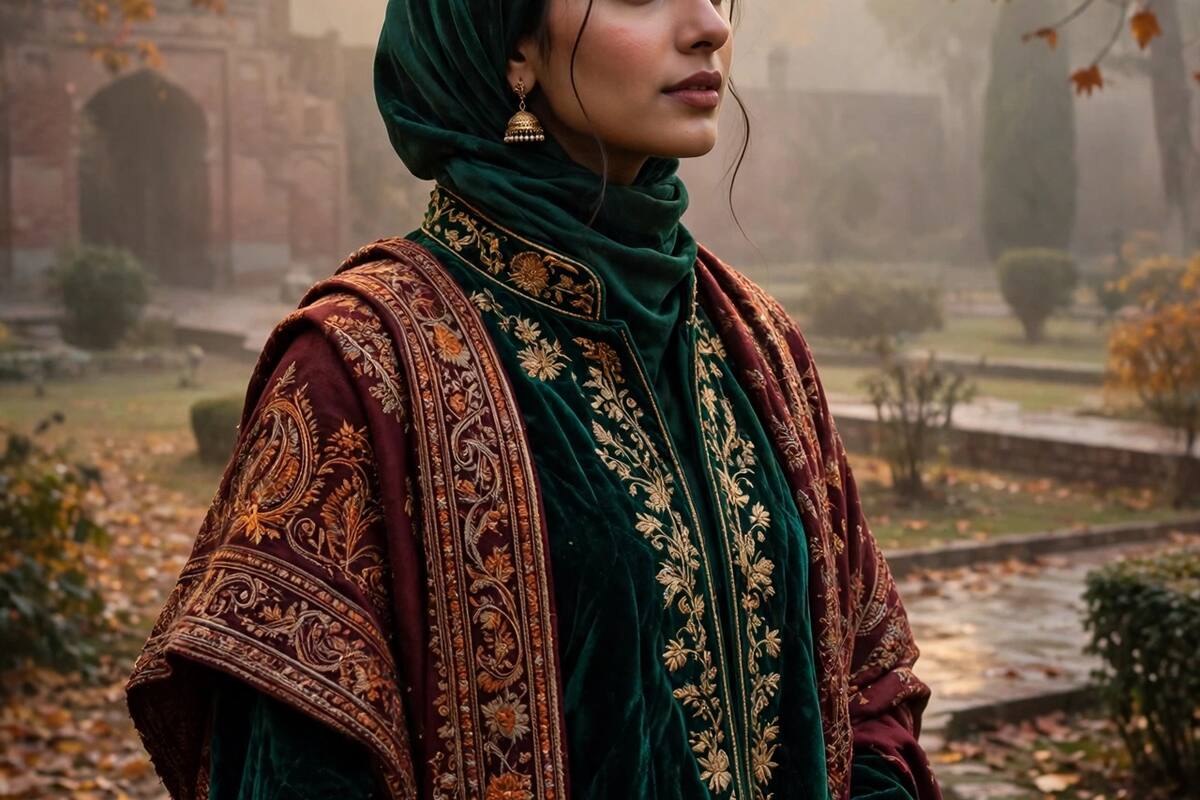
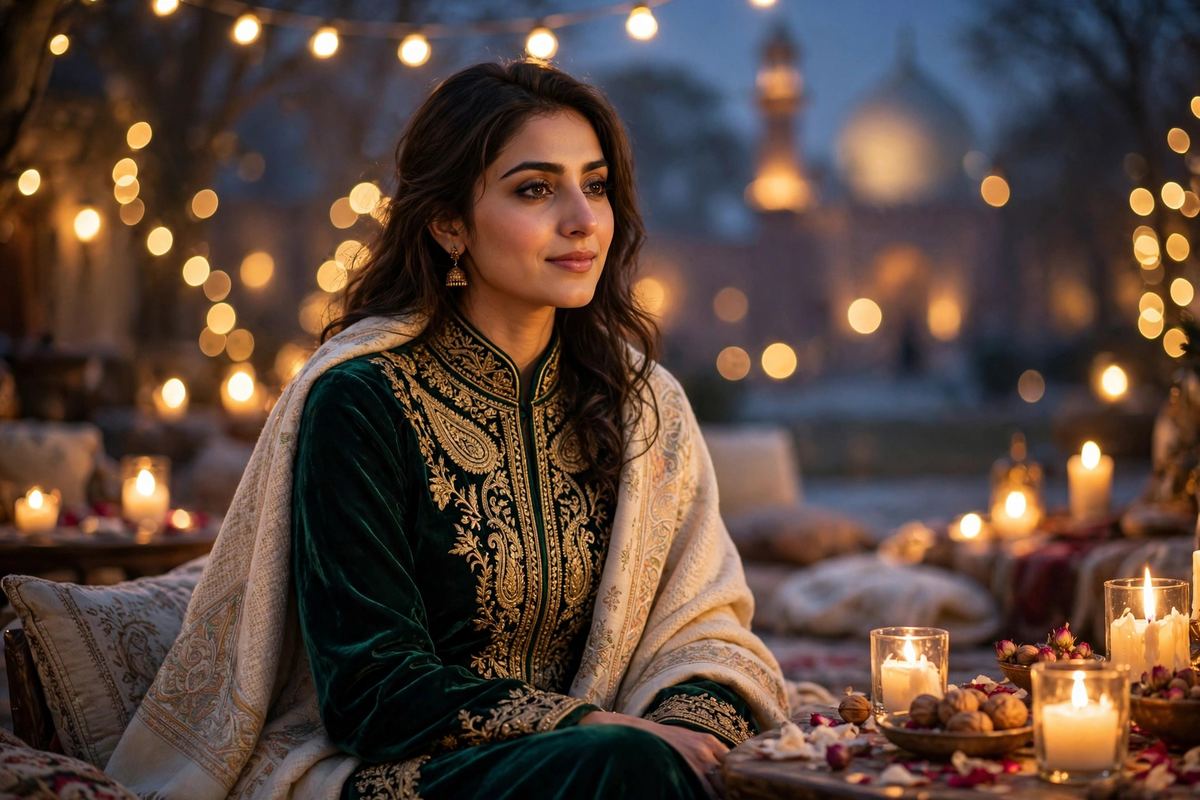
Deep jewel tones are the safest and most flattering choice for winter. Plum, emerald, deep teal, navy and burnt copper all look rich in evening light and pair beautifully with gold embroidery. A plum velvet suit is a classic mother-of-the-bride look, while emerald suits mothers of the groom, since the groom often wears ivory or gold.
Muted tones work wonderfully too: dusty rose, sage green, warm beige, rust and deep mustard suit daytime functions like the mehndi and dholki. For the valima, a soft pastel — powder blue, blush pink or mint — with silver embroidery looks fresh and elegant. Avoid stark white, which can look washed out in photos, and avoid bright neons. A smart trick is to coordinate without matching exactly: if the sisters wear shades of green, the mother can wear a deeper emerald.
Velvet is the season’s best friend: warm, rich and beautiful under wedding lights. A velvet long shirt with light to medium embroidery is ideal; ask your tailor to keep the threadwork fine, because very dense embroidery can make velvet stiff and heavy. Our velvet dresses for winter weddings guide explains which velvet weights work best for formal evenings.
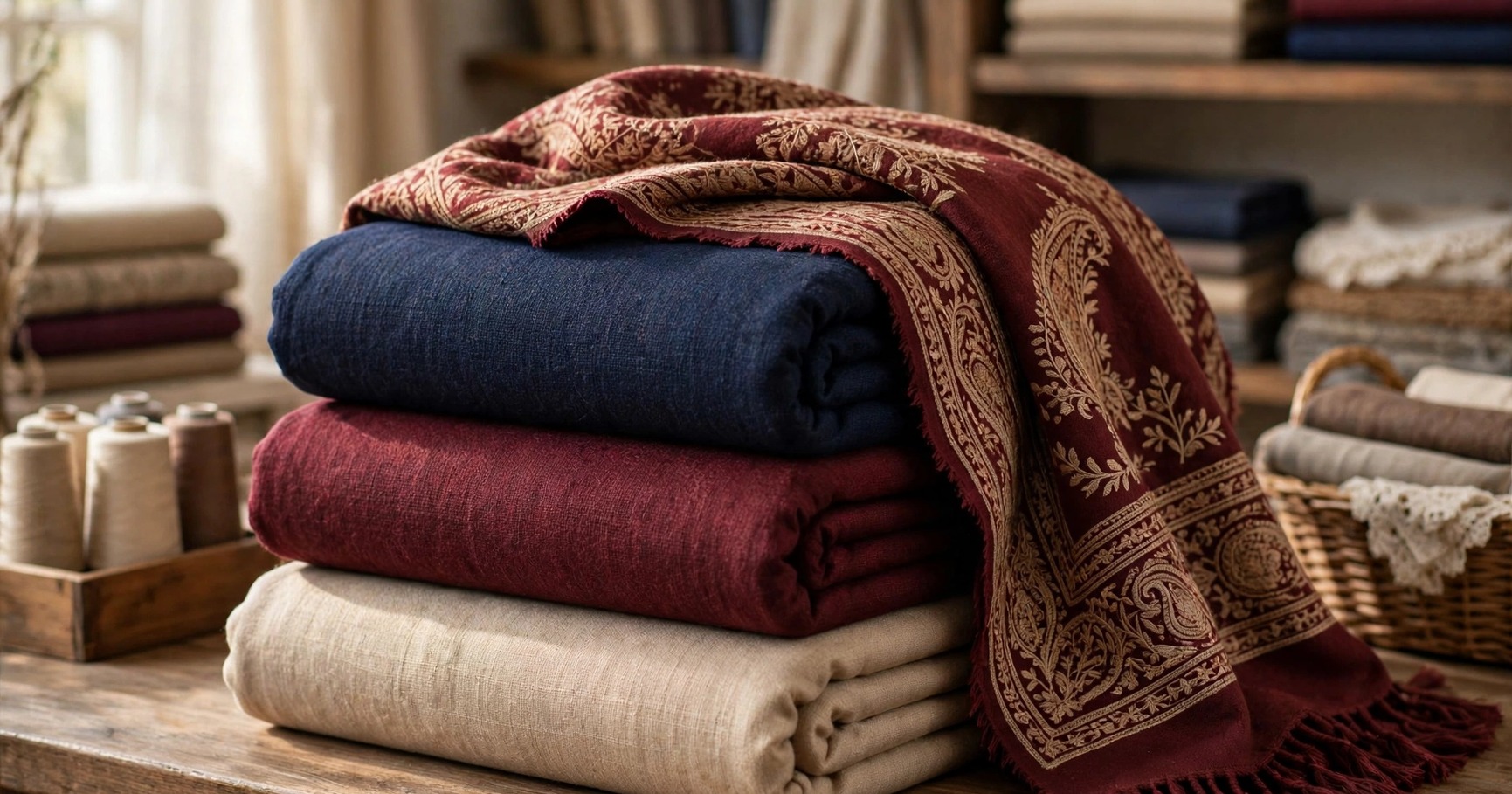
Jamawar and raw silk add structure and shine without the weight of velvet, and jamawar’s woven patterns look expensive even with minimal embroidery. Pashmina is the secret weapon: a fine pashmina shawl over any of these fabrics adds warmth and elegance in one move. Avoid unlined chiffon and net for the main outfit in winter — they offer no warmth. If you love chiffon, choose a fully lined version with a velvet or pashmina dupatta.
For a mother, the shawl is not an accessory — it is part of the outfit. The right shawl adds warmth, covers the shoulders gracefully, and completes the look in a way no jacket can.
An embroidered pashmina shawl in a matching or softly contrasting colour is the easiest choice: warm, elegant and easy to pin in place. A velvet shawl with a gold border looks regal over a plain velvet suit.
The dupatta deserves the same planning: pin it securely at both shoulders and keep one end free to drape over the head for the nikkah or dua. Our pashmina shawl styling guide shows draping styles that work beautifully with formal suits and sarees.
A mother’s jewellery should be beautiful and heirloom-worthy, but not bridal-heavy. Gold is the classic choice: jhumkas, a delicate necklace or choker, and a few bangles are enough. Polki and kundan pieces look stunning with velvet in evening light, while pearls pair beautifully with softer colours. A single statement piece is better than five competing ones.
Winter makeup for mothers should be soft, warm and long-lasting: moisturise well, choose a hydrating base, and add blush to bring warmth back to the face in cold weather. A deep berry lip looks gorgeous with jewel tones, while a soft rose lip suits pastels. Hair should be neat and secure: a low bun shows off your earrings and stays tidy for hours. Our winter wedding makeup and hairstyles guide has looks that last all night in cold weather — the same tips work beautifully for mothers.
A mother does not need a new outfit for every function — two or three well-chosen looks cover the whole wedding. For the mehndi, choose colour and comfort: a maroon or mustard velvet suit or a festive gharara, with lighter jewellery and a shawl you can slip off while clapping along. For the nikkah, choose grace and modesty: a dusty rose or teal lined suit with a neatly pinned dupatta and pearl or gold jewellery.
For the barat, choose your most regal look: a deep plum or emerald velvet suit, a silk saree with a velvet blouse, or a jamawar angrakha — rich fabric, fine gold embroidery, a beautiful shawl and your best jewellery. Remember: avoid exact bridal red on this day. For the valima, choose softness: an ivory, powder blue or blush suit with silver or gold embroidery. If the budget allows only one new outfit, spend it on the barat look and re-wear a good existing suit for the mehndi with a new shawl. Our winter barat outfits guide has more ideas for the biggest night of the wedding.
A beautiful mother’s outfit does not need a designer price tag. Ready-made formal suits from local markets and mid-range brands usually fall in the range of Rs 8,000–25,000, while a good velvet or jamawar suit from a reputable local tailor generally costs Rs 15,000–40,000 including stitching. A fine pashmina shawl ranges from Rs 3,000–12,000, and a silk saree with a velvet blouse usually falls between Rs 12,000–35,000.
The smartest place to spend is the fabric: a good velvet or jamawar in a classic colour will look expensive for years and can be re-worn to other weddings with a different dupatta or shawl. Save money by keeping the embroidery fine rather than heavy — it costs less, feels lighter, and looks more refined. Start shopping at least three to four weeks before the wedding so the tailor has time for fittings.
The most common mistake is copying the bride: a mother’s outfit should complement the bride, not mirror her. The second is choosing beauty over comfort — an outfit you cannot sit in, a dupatta that slips every ten minutes, or heels you cannot stand in will ruin the evening no matter how beautiful they look in the mirror.
The third is forgetting the cold: many mothers plan the outfit indoors and only discover at the wedding that the hall is freezing. Always plan the shawl as part of the look. And do not leave it too late — book the tailor early, do two fittings, and try the full outfit at home a week before the wedding.
What colour should the mother of the bride wear to a winter wedding?
Deep jewel tones like plum, emerald, teal and navy are the most flattering winter choices. Avoid exact bridal red on the barat day.
What is the best fabric for a mother’s winter wedding outfit?
Velvet, jamawar, raw silk and silk are the best winter choices — warm, rich and elegant. Pair any of them with a pashmina shawl, and make sure chiffon outfits are fully lined.
How early should a mother order her wedding outfit?
Start at least three to four weeks before the wedding, with two fittings and a full trial at home a week before the event.
A mother’s outfit at her child’s wedding is not a detail — it is part of the memory. She will be in the photographs her children keep for the rest of their lives. Choose a rich winter fabric, a colour that flatters you, a shawl that keeps you warm, and jewellery that feels like yours.