Physical Address
304 North Cardinal St.
Dorchester Center, MA 02124
Physical Address
304 North Cardinal St.
Dorchester Center, MA 02124

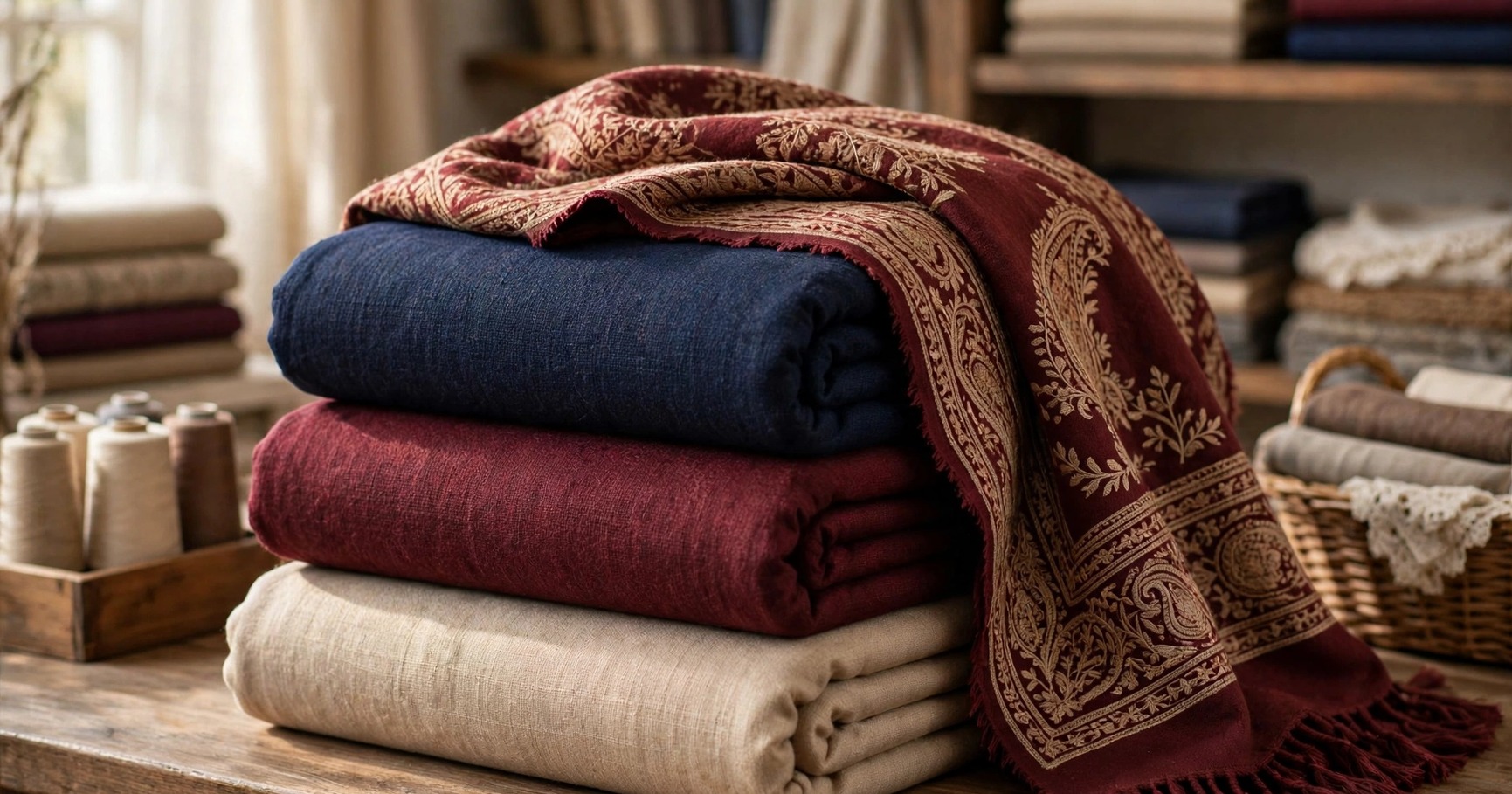
You know that woman at every winter dawat who looks like she spent Rs. 12,000 on her suit, then casually mentions it was under three thousand? She is not lying, and she is not lucky. She just knows something most shoppers don’t: in Pakistani winter fashion, the fabric and the finishing do 90% of the work, and the price tag does almost none of it.
Every pick below is a winter suit you can genuinely put together for under Rs. 3,000 in 2026 — warm fabrics, trending cuts, easy to find in local markets and online. No fantasy shopping. Just smart picks, honest price ranges, and the styling tricks that make cheap look expensive.
Printed khaddar 3-pieces are everywhere in 2026 — unstitched fabric usually runs around Rs. 1,500–2,200, and stitching a simple straight shirt with trousers adds roughly Rs. 600–900 at a neighbourhood tailor. Total: comfortably under Rs. 3,000. Khaddar is thick, warm, and this season’s prints (small florals, geometric borders) look far pricier than they are. Check the latest price on Naheed.pk or browse Daraz’s khaddar collections before heading to the market so you know the going rate.
Buy a plain karandi 2-piece (usually around Rs. 1,200–1,800 unstitched), then spend the real money on one gorgeous printed shawl (around Rs. 800–1,200). A printed shawl elevates the plainest suit instantly — it becomes the outfit, and nobody looks at the simple suit underneath. One shawl rotated over two plain suits gives you multiple “new” outfits.
One colour head to toe in different textures is the easiest way to look rich on a budget in 2026. A beige or camel khaddar shirt with slightly darker trousers and a lighter dupatta costs the same as any mismatched suit, but photographs like a styled outfit. Even small shade differences read as intentional. Unstitched beige khaddar is among the cheapest winter fabrics, usually around Rs. 1,400–2,000.
Chickenkari is back in a big way this winter, and budget shoppers should be thrilled: white-thread embroidery on coloured fabric looks delicate and premium, but chickenkari kurtis are widely available in the Rs. 1,500–2,500 range ready-made. Pair with simple black or navy straight trousers (Rs. 500–800) for an outfit that works for office, daytime dawats, and everything in between.
Two-piece suits (long kurta, no dupatta) are trending for casual winter days, and marina fabric is warm, soft, and cheap — usually around Rs. 1,000–1,600 for a 2-piece. The 2026 upgrade: throw a long knitted cardigan over it. Cardigans go for under Rs. 1,000 in winter markets and sale racks, and the layered look reads modern and put-together. For dupatta draping ideas on days you do want one, see our modest fashion outfit ideas.
Look for karandi or linen-blend suits in deep winter colours — charcoal, bottle green, navy — with embroidery only on the neckline or sleeves. These “minimal embroidery” suits are a 2026 staple: refined without the cost of all-over work. Ready-made options in local markets typically sit around Rs. 2,000–2,800, and dark bases hide wear, so the suit looks new for longer.
Pair a printed khaddar shirt with plain velvet trousers in a deep colour (maroon, emerald, black). Velvet trousers cost around Rs. 700–1,100 stitched, and the texture contrast makes the whole outfit look deliberate and rich — perfect for evening family dinners without buying a full formal suit.
Self-print (tone-on-tone) karandi has a subtle sheen that reads expensive in person. Add a dupatta with tassels or a simple embroidered border — small details that cost little but change everything. A self-print karandi 3-piece usually lands around Rs. 1,800–2,600 ready-made.
Do not ignore brand sale racks in November and December. Last-season pret from mid-range brands regularly drops to Rs. 2,000–2,900 during winter clearance — branded stitching and finishing at unstitched prices. Sizes are limited, so this works best if you are flexible, but the quality-per-rupee is unbeatable.
Instead of one 3-piece, buy separates: a printed khaddar shirt (Rs. 900–1,300 stitched), a plain karandi shirt in a complementary colour (Rs. 800–1,200), and one pair of neutral trousers plus one dupatta. Total stays under Rs. 3,000, and swapping tops gives you two complete outfits. This is how budget wardrobes multiply — the same approach as our winter wedding guest outfits, where one hero piece carries multiple looks.
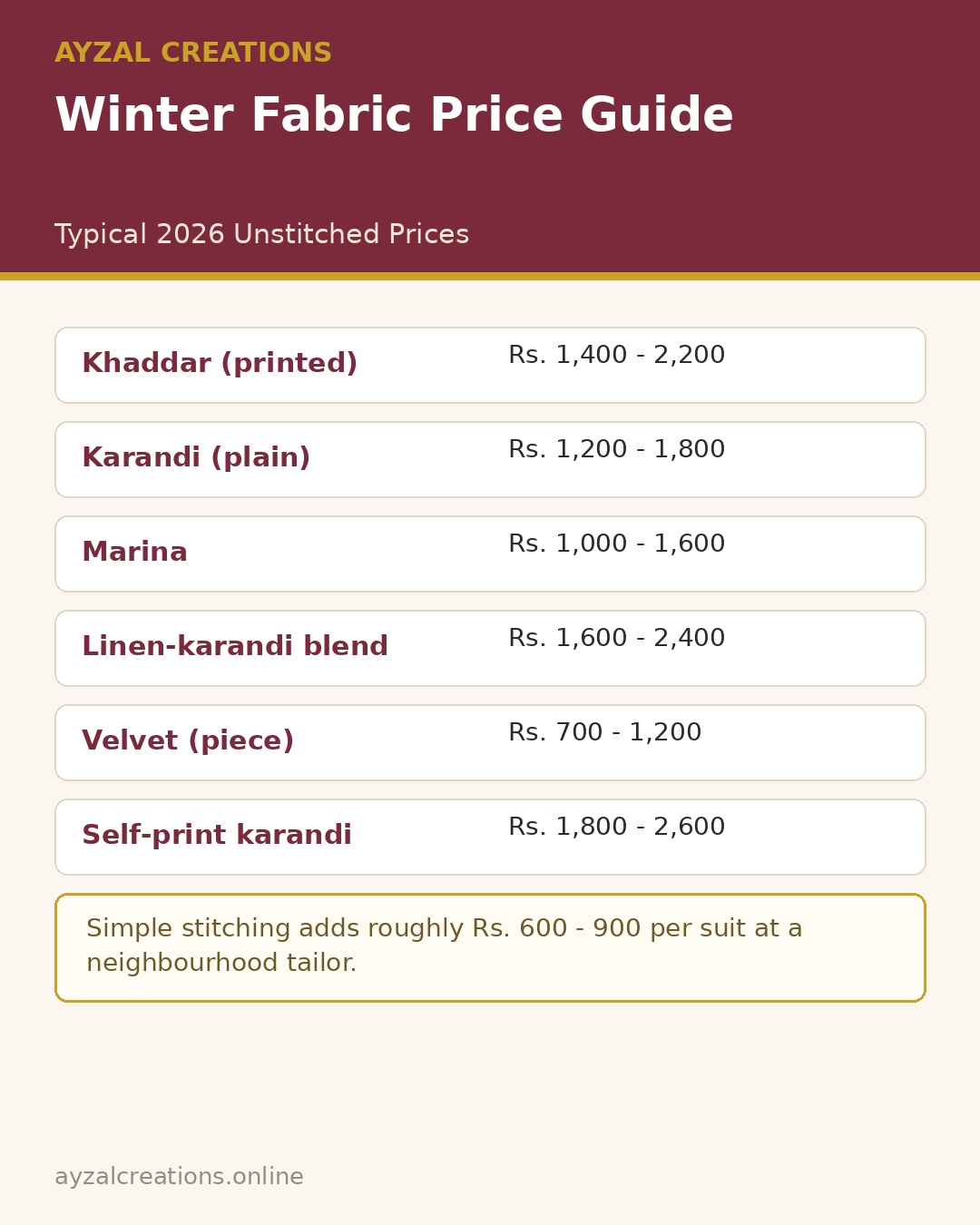
| Fabric | Typical unstitched price range | Warmth | Best for |
|---|---|---|---|
| Khaddar (printed) | Rs. 1,400–2,200 | High | Everyday suits, college, home |
| Karandi (plain) | Rs. 1,200–1,800 | High | Base suits to style up with shawls |
| Marina | Rs. 1,000–1,600 | Medium-high | Casual 2-pieces, layering looks |
| Linen-karandi blend | Rs. 1,600–2,400 | Medium | Office wear, semi-formal |
| Velvet (trousers/shawl) | Rs. 700–1,200 (piece) | High | Evening contrast pieces |
| Self-print karandi | Rs. 1,800–2,600 | High | Dressier daytime looks |
Ranges are typical 2026 market prices in Pakistan; stitching usually adds Rs. 600–900 for a simple suit.
Yes — comfortably. Printed khaddar and plain karandi unstitched suits typically run Rs. 1,200–2,200, and simple stitching adds around Rs. 600–900. That puts most everyday winter suits at Rs. 2,000–2,800 all-in. The suits that break Rs. 3,000 are usually branded pret or heavily embroidered pieces, which this guide deliberately skips.
Khaddar gives you the most warmth per rupee — it is thick, widely available, and among the cheapest winter fabrics at around Rs. 1,400–2,200 unstitched. Karandi is a close second with a slightly dressier finish. Both beat expensive-looking but thin fabrics that leave you shivering at December dawats.
Unstitched plus a good tailor almost always wins under Rs. 3,000. You control the fabric quality, the fit is yours, and simple stitching costs roughly Rs. 600–900. Ready-made only wins during brand clearance sales, when pret drops into the Rs. 2,000–2,900 range with finishing you can’t replicate cheaply.
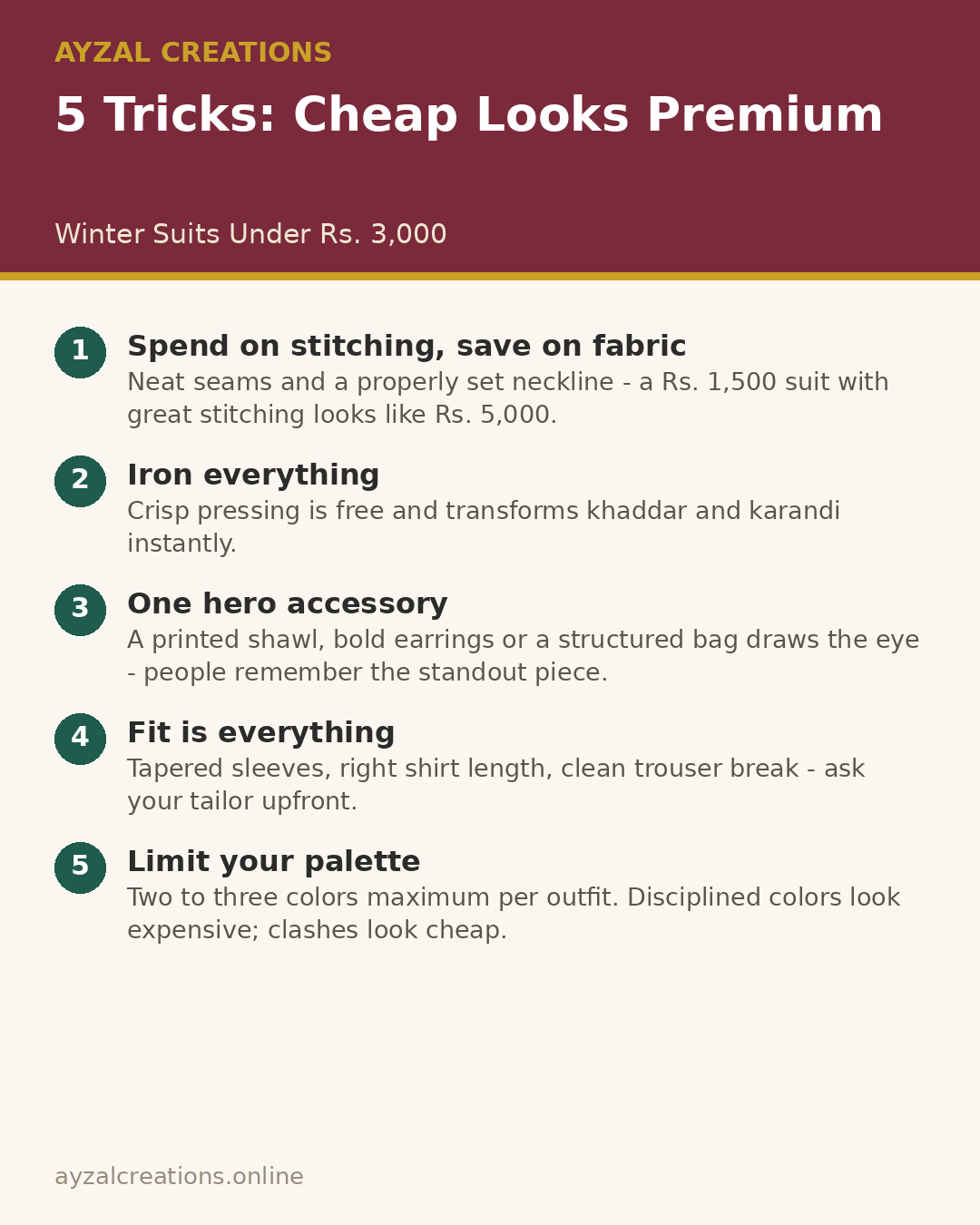
Three moves: press it crisply, add one hero piece (an embroidered or velvet shawl, statement earrings), and keep the colour palette tight. A plain dark karandi suit with a rich shawl and polished styling passes effortlessly at semi-formal winter events.
Dressing well in winter on Rs. 3,000 isn’t about miracle bargains — it’s about knowing where the money shows. It shows in the fabric weight, the stitching, the pressing, and the one confident accessory. It never shows in the brand tag, which is fortunate, because nobody at the dawat can see the tag anyway.
Start with two printed khaddar suits and one statement shawl. Get them stitched well, press them every time, and wear them like they cost triple. That is the entire secret.
The Ayzal Creations Editorial Team writes practical fashion and lifestyle guides for women and parents in Pakistan — from seasonal trends and modest style to kids’ fashion and everyday beauty. Every article is researched and written to help you look great and shop smart.