Physical Address
304 North Cardinal St.
Dorchester Center, MA 02124
Physical Address
304 North Cardinal St.
Dorchester Center, MA 02124

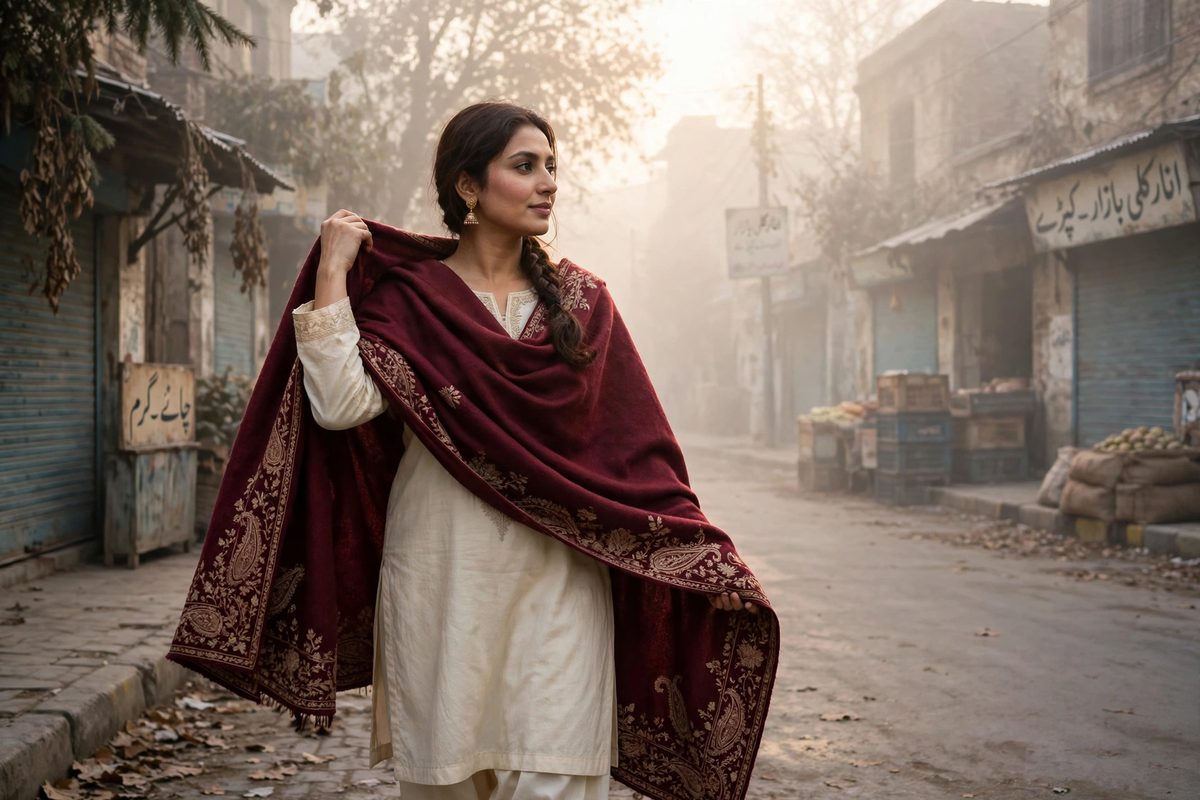
Ask any Pakistani woman what finishes a winter outfit, and the answer is almost always the same: the dupatta. It does three jobs at once — it keeps you warm, it completes the outfit, and it carries the colour and embroidery of the whole look. A plain suit becomes a wedding outfit with the right dupatta; a heavy winter suit becomes wearable outdoors with a warm wool one.
Winter is when the dupatta matters most. Summer dupattas are light chiffon or lawn, chosen mostly for colour. Winter dupattas are heavier, warmer and more visible: wool, pashmina, velvet and thick embroidered fabrics that sit on the shoulders for hours and show up in every photograph. This guide covers the winter dupattas worth owning in 2026 and ten ways to drape them for weddings, work and everyday wear.
In summer the dupatta is often an afterthought, but in winter it becomes a layer in its own right. A thick wool or pashmina dupatta adds real warmth on a foggy morning, and unlike a coat it can stay on indoors, at a dinner or at a dholki without looking out of place.
The winter dupatta also does more visual work. Winter suits tend to be plainer and darker — khaddar, wool and marina in maroon, navy, charcoal and bottle green — so the dupatta carries the pattern and the embroidery. One beautifully embroidered dupatta can lift three different plain suits, which makes it one of the best-value pieces in a winter wardrobe.
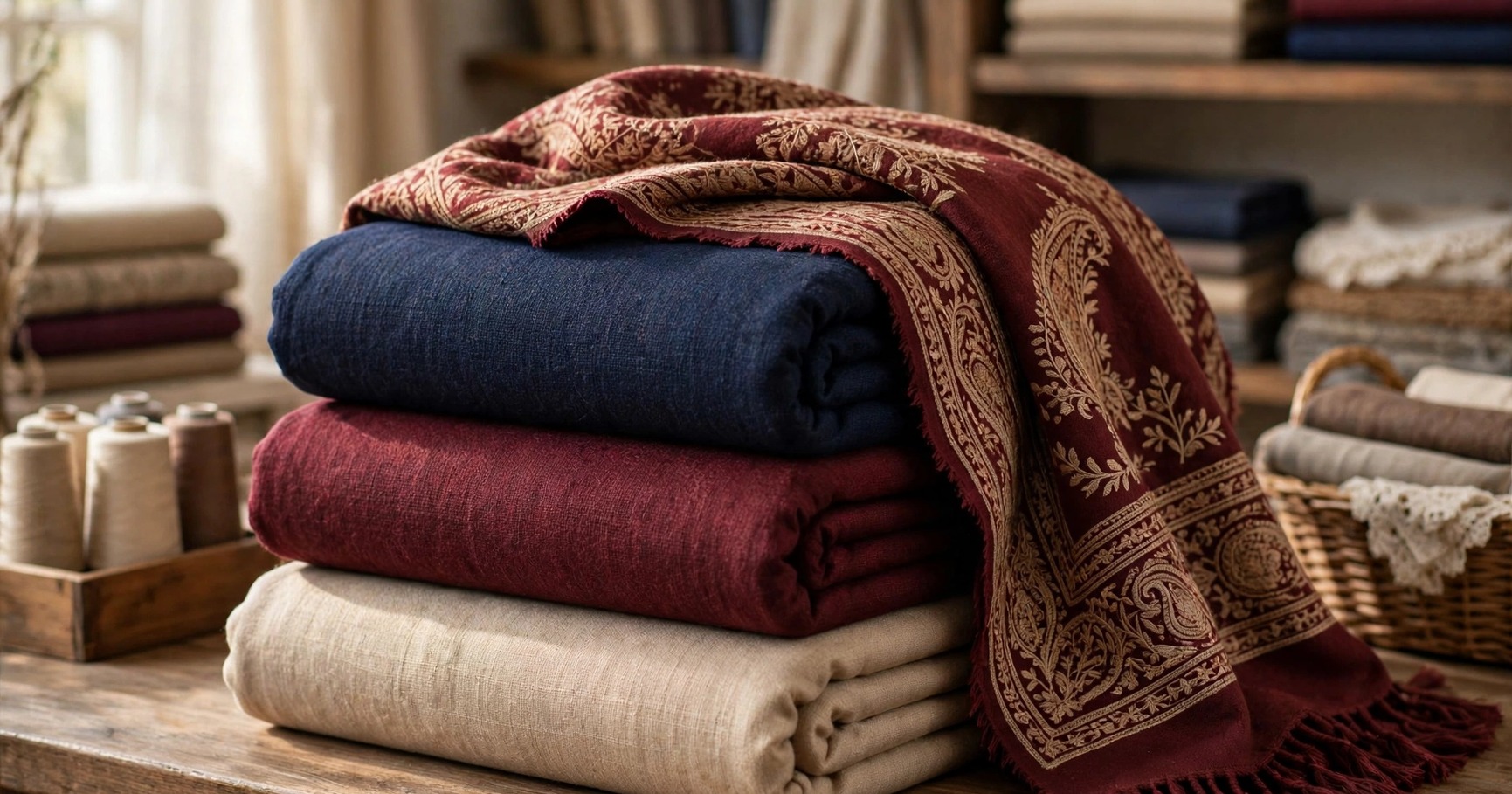
The wool dupatta is the most practical winter dupatta, and the one most Pakistani women actually wear every day. It is warm, it stays in place, and it suits almost any winter suit. Plain wool dupattas in solid colours — maroon, navy, charcoal, bottle green, camel — go with printed khaddar suits, plain wool kameezes and marina outfits alike.
Look for a wool dupatta with a finished border or a fine woven pattern; the border is what makes it look intentional rather than improvised. A good ready-made wool dupatta usually costs around Rs 1,500–4,000. One in a neutral colour and one in a jewel tone will cover most of the winter.
Pashmina is the luxury option, and it earns the price. A genuine pashmina dupatta is feather-light yet warmer than a much heavier wool one, and it drapes beautifully — it falls in soft folds instead of sitting stiffly on the shoulders. That drape is why pashmina dupattas photograph so well at winter weddings and dinners.
Choose pashmina in solid, deep colours for the most use: maroon, plum, bottle green, navy or classic black. A plain pashmina with a fine woven border is more versatile than a heavily patterned one, because it works with both printed and embroidered suits. Expect to pay roughly Rs 4,000–12,000 for a good pashmina dupatta in Pakistan. Pashmina should be dry-cleaned or hand-washed gently, never wrung out — a well-kept pashmina lasts for years. If you already love pashmina, our guide to styling a pashmina shawl covers ten elegant looks that work with the dupatta’s bigger cousin too.
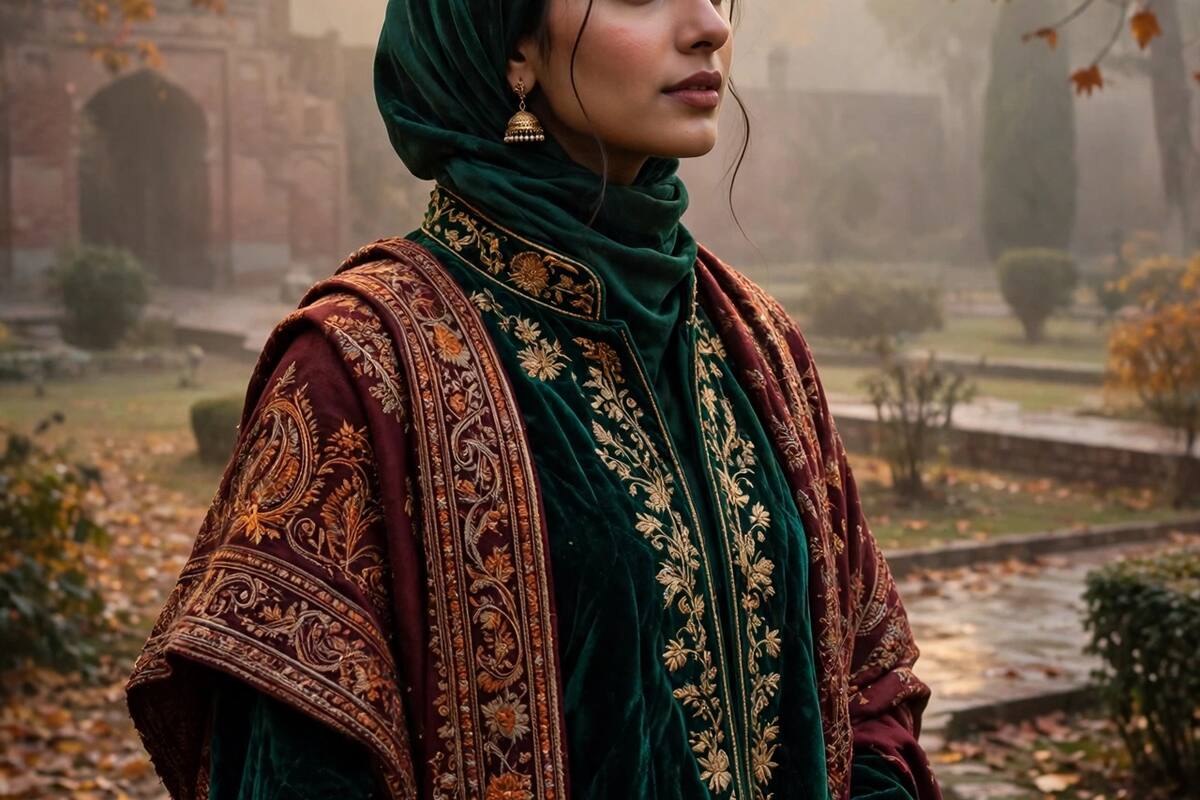
When the occasion is a wedding, a dholki or a formal dinner, the dupatta steps up. Embroidered dupattas — threadwork, zari, mirror work or gota — turn a plain velvet or silk suit into a festive outfit, and a velvet dupatta with a gold border is one of the most classic winter wedding looks in Pakistan.
Budget-wise, a ready-made embroidered dupatta usually costs around Rs 3,000–10,000, while a velvet dupatta with zari work ranges from about Rs 2,500–8,000. For a wedding guest a mid-range embroidered dupatta is usually enough, especially when paired with a good velvet suit. Our guide to velvet dresses for winter weddings shows how the dupatta and the dress should work together.
The same dupatta can look completely different depending on how it is draped. These ten styles cover almost every occasion.
1. The classic double-shoulder drape. The dupatta spread evenly over both shoulders, falling straight down the front. Neat, modest and the safest choice for family gatherings.
2. The one-side drape. The dupatta pinned on one shoulder, falling to one side. It shows off embroidery beautifully and is the standard choice for wedding photographs.
3. The front pallu. The dupatta brought forward over one shoulder so the decorated end falls in front. It frames the neckline and works well with a plain suit and a statement dupatta.
4. The shawl-style wrap. The dupatta wrapped around the shoulders like a shawl, both ends tucked in. The warmest way to wear a wool or pashmina dupatta on a cold morning — and the closest a dupatta comes to a coat.
5. The belted drape. The dupatta draped over the shoulders and caught at the waist with a thin belt. A modern look that keeps a long dupatta out of the way at dinners.
6. The scarf wrap. The dupatta folded lengthwise and wrapped loosely around the neck like a scarf, with the ends falling in front. Ideal for casual winter days with a sweater.
7. The head-cover drape. The dupatta taken over the head and pinned, with the rest falling over the shoulders. Traditional, elegant and practical for winter weddings and religious gatherings.
8. The cape drape. The dupatta spread across the back and shoulders like a cape, pinned at the front. It shows off a full embroidered border.
9. The cross-body drape. The dupatta worn diagonally across the body, from one shoulder to the opposite hip, pinned at the shoulder. A fashionable, structured look for parties and dinners.
10. The loose front fall. The dupatta simply laid over both shoulders with both ends falling freely in front, unpinned. The most relaxed option — best for light wool dupattas at home or at casual family lunches.
A small practical tip for all ten: carry two or three small safety pins in your bag. A pinned dupatta stays put through a whole wedding; an unpinned one needs fixing every ten minutes.
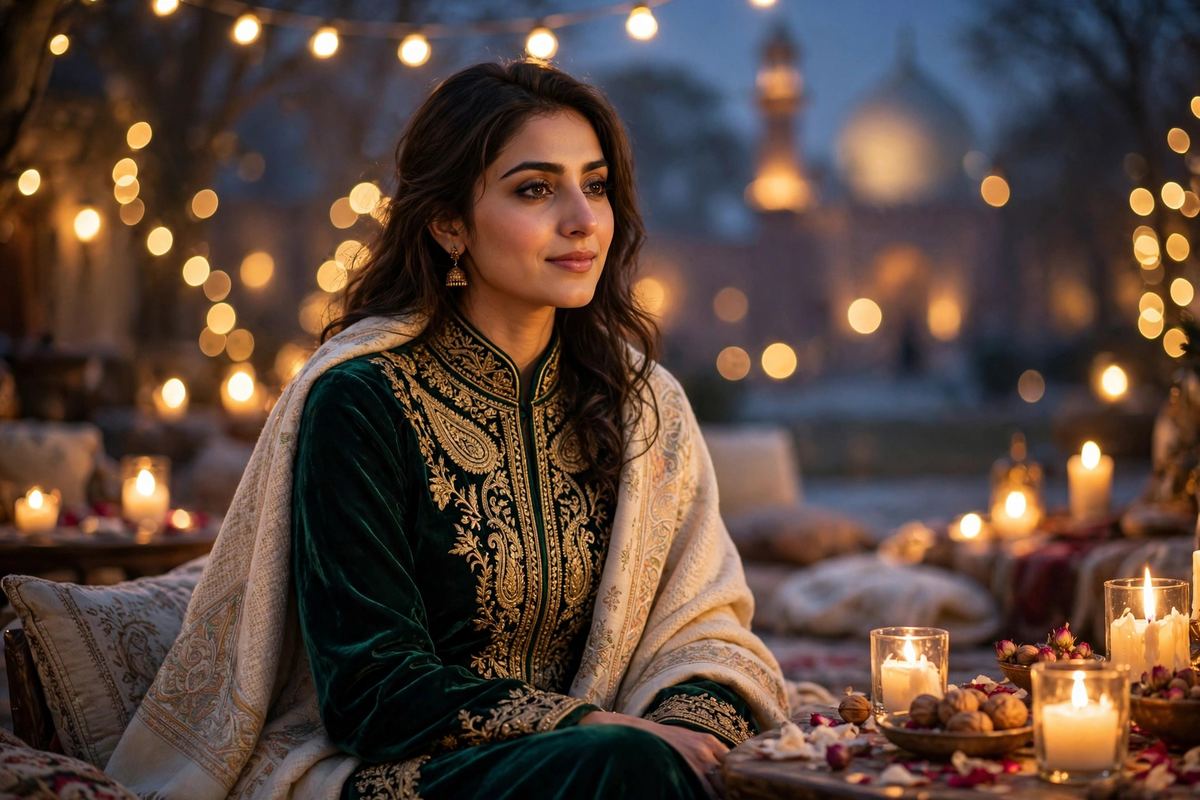
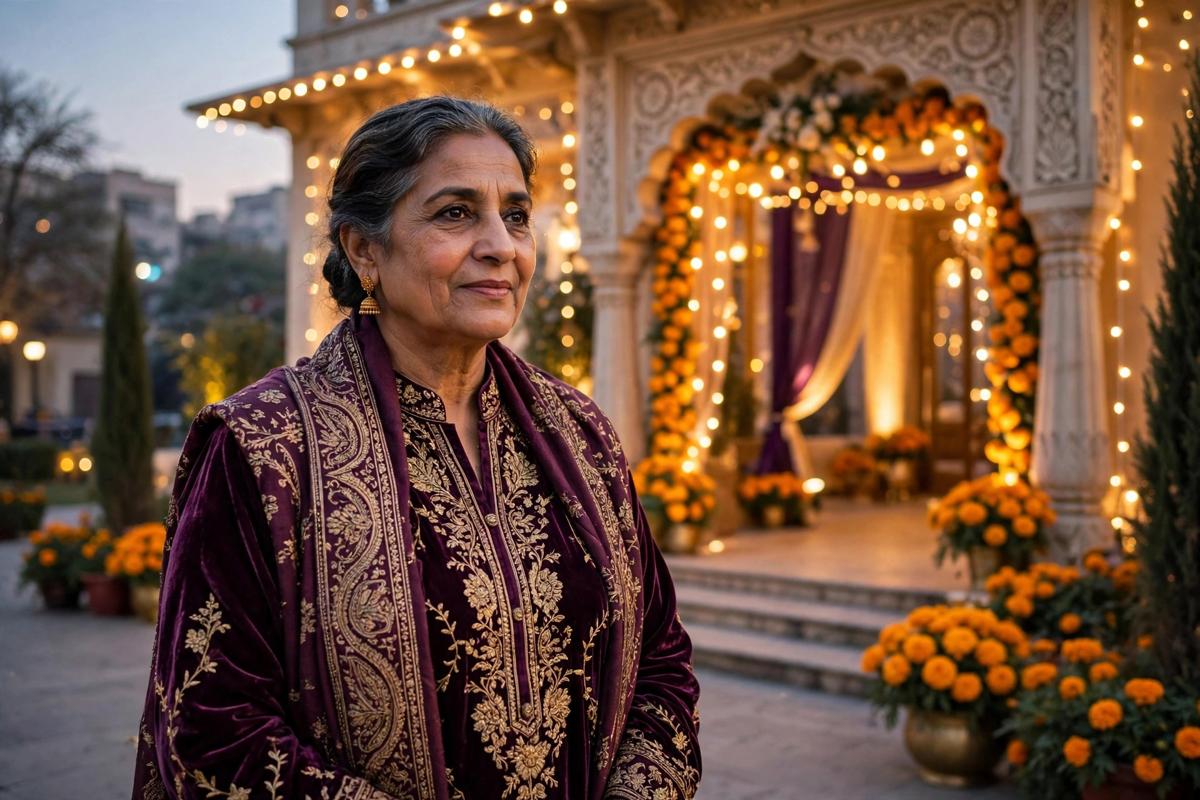
At a winter wedding, the dupatta is part of the outfit’s statement. For a barat or walima, choose a velvet or heavily embroidered dupatta in a jewel tone — maroon, emerald, plum or navy — and drape it one-sided or as a front pallu so the work shows. For a mehndi or dholki, a brighter dupatta with gota or mirror work works well — mustard, hot pink or teal.
At work, the dupatta should be neat, secure and quiet. A plain wool or pashmina dupatta in a solid neutral — navy, charcoal, black or camel — draped double-shoulder or shawl-style is professional and warm. Pin it at the shoulder so it does not slip while you work, and avoid long, trailing ends that catch on chair arms and desk corners. For everyday errands, a medium-weight wool dupatta is the most practical choice — warm enough for the morning fog, light enough to carry indoors, and easy to wash.
Three combinations work almost every time: a jewel-tone dupatta over a neutral suit, a contrasting dupatta over a plain suit, and a tone-on-tone dupatta over a printed suit. If the suit is printed, keep the dupatta plain and pick up one colour from the print; if the suit is plain, the dupatta can carry the pattern. When in doubt, a cream or beige dupatta goes with almost every winter colour. Our winter fabrics guide covers the season’s best palettes fabric by fabric.
Winter dupattas last for years when they are stored well, and one season when they are not. Fold wool and pashmina dupattas rather than hanging them, because hanging stretches them out of shape. Keep them in a cotton bag or muslin cloth with a dried neem leaf or lavender sachet to keep moths away — moths love wool and pashmina.
Wash wool dupattas in cold water with a mild detergent, and never wring them; press the water out gently and dry them flat in the shade. Embroidered and velvet dupattas should be dry-cleaned, especially if the embroidery uses metallic thread, which water and harsh detergents can tarnish. At the end of winter, wash each dupatta once, dry it fully, and store it folded with tissue paper between the folds so the embroidery does not snag.
Which dupatta fabric is warmest for Pakistani winters? Pashmina is the warmest for its weight, followed by thick wool. Velvet is warm too, but best kept for occasions.
Can I wear a velvet dupatta to the office? A plain velvet dupatta with a simple border can work with a formal outfit, but a heavily embroidered one usually looks too festive for work.
How do I stop my dupatta from slipping off my shoulder? Pin it with a small safety pin at the shoulder, and choose fabrics with a little grip — wool and pashmina grip better than silk or chiffon.
What colour dupatta goes with a black winter suit? Almost any jewel tone works: maroon, emerald, mustard or royal blue. A maroon embroidered dupatta over a black suit is a classic winter wedding combination.
The winter dupatta is small, but it carries the whole outfit. It is the warmth on a foggy morning, the colour against a dark winter suit, and the embroidery that turns a plain kameez into a wedding look. You do not need a dozen of them — a warm wool dupatta, a soft pashmina and one good embroidered dupatta, in colours that suit you, will cover weddings, work and everyday wear for the entire season.