Physical Address
304 North Cardinal St.
Dorchester Center, MA 02124
Physical Address
304 North Cardinal St.
Dorchester Center, MA 02124

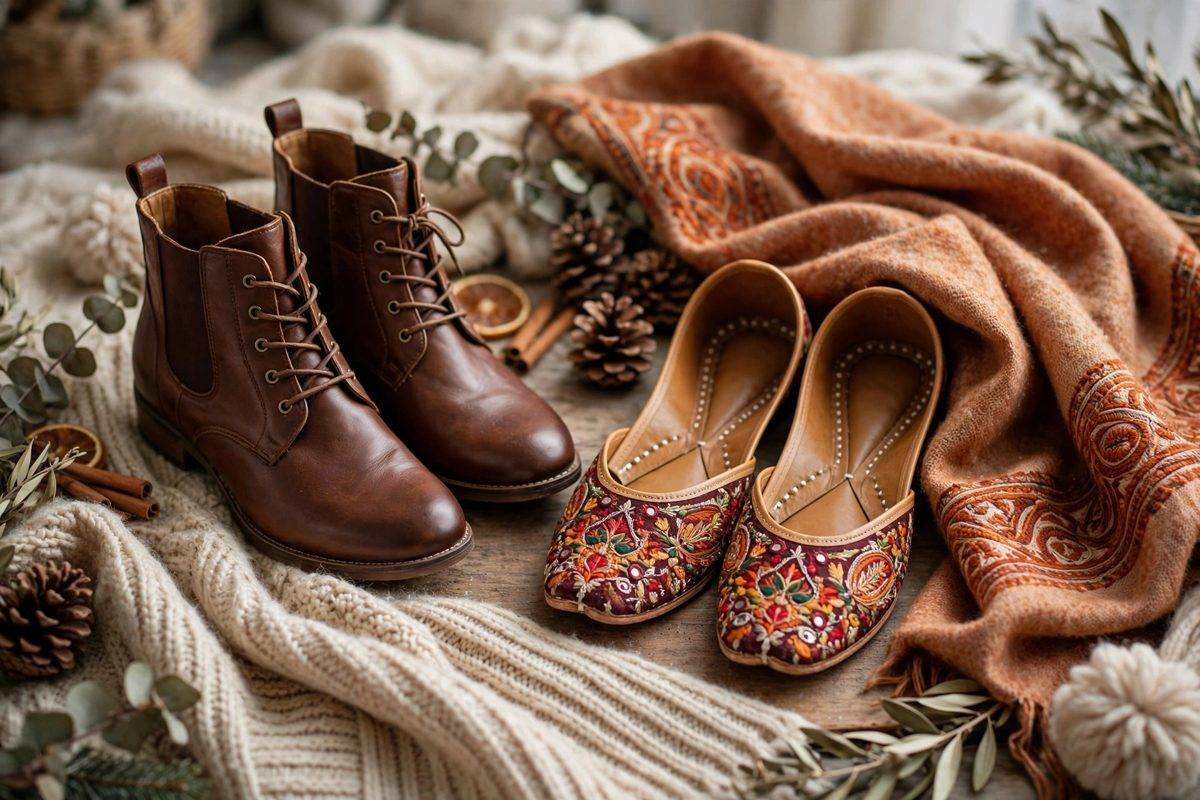
Every Pakistani winter has the same turning point: the morning you step out in thin summer sandals, feel the cold floor through the sole, and realise your feet did not get the memo about December. We plan our shawls, coats and velvet dresses with great care, and then we undo the whole look — and our comfort — with the wrong shoes.
Winter footwear is not just about warmth. The right pair changes how an outfit looks, how long you can stay on your feet at a dawat, and whether you arrive at a wedding looking polished or just cold. This guide covers the shoes Pakistani women actually wear in 2026: ankle boots, long boots, embroidered khussay, warm loafers and closed wedding shoes, with honest advice on what suits which outfit and what to expect to pay.
Pakistani winters are not one kind of cold. A foggy Lahore morning, a dry Islamabad evening, a windy Murree weekend and a heated wedding hall in Karachi are four different problems for your feet. Add our mix of outfits — shalwar kameez, long coats, velvet lehengas, formal frocks — and one pair of shoes simply cannot do everything.
Good winter footwear does three jobs at once: it insulates, it grips on wet or foggy pavements, and it finishes the outfit the way a shawl finishes a suit. Comfort matters just as much — winter events run long, and shoes that pinch in the shop will feel worse by the third hour. Try them with the socks you plan to wear, and walk around the shop for five minutes before deciding.
If you buy only one pair of winter shoes this year, make it ankle boots. They are the easiest winter shoe to style with Pakistani outfits, and they work for almost every everyday occasion, pairing beautifully with straight trousers, cigarette pants and the hem of a long kameez when the length is right. Under a long coat, they create a clean, modern line that instantly makes the outfit look put together. For building those coat outfits, see our Winter Layering Guide for Pakistani Women 2026
Choose the heel with honesty about your day: a flat or low block heel is the everyday winner for markets, offices and school runs, while a mid block heel suits dinners and dawats. Reserve very high heels for short events where you will mostly be seated. For colour, black goes with everything and hides winter dust; brown or tan softens dark outfits and suits camel, beige and olive coats.
Decent faux-leather ankle boots generally fall in the Rs 3,000–8,000 range, while genuine leather pairs usually start around Rs 8,000. Leather lasts longer, but a well-made faux-leather pair is fine for one or two seasons.
Long boots — knee-high or just below the knee — are the statement pair of winter. They look best with long coats, knee-length frocks and straight trousers tucked in, and they are genuinely warmer than ankle boots because they cover more of the leg.
They suit taller frames and longer coats well, but shorter women can wear them too if the rest of the outfit stays streamlined. Fit matters more here: check the calf measurement, not just the foot size, when shopping online. Expect roughly Rs 5,000–12,000 for good faux-leather long boots, and Rs 12,000 or more for leather — choose a classic plain style that will still look current next winter.
No winter footwear guide for Pakistan is complete without khussay. Embroidered khussay are flat, beautifully worked and unmistakably ours, and they remain the most comfortable choice for long desi events.
For winter, look for khussay with a slightly thicker sole and a cushioned insole — the traditional thin sole is lovely in summer but cold on winter floors. Embroidered and mirror-work khussay pair wonderfully with shalwar kameez, and they are the natural choice for a mayoun or family dawat where you want to look traditional without sacrificing comfort.
Khussay also solve a common wedding problem: the outfit too formal for boots but too long for heels. A pair in gold, silver or a matching jewel tone sits beautifully under a lehenga, and you can dance in them for hours. For velvet wedding outfits, our Velvet Dresses for Winter Weddings guide — covers colours that pair well with metallic footwear. Simple embroidered khussay often cost Rs 1,500–4,000; heavily embellished pairs go higher. Fit should feel snug but not tight when new, as the material softens with wear.
Not every winter day calls for boots. For office days, university, shopping and school runs, warm loafers and closed shoes are the comfortable middle ground. Look for loafers with a soft inner lining — fleece or brushed fabric makes a real difference on cold mornings — and a sole with some grip. Suede-look loafers are stylish but need care in wet weather; smooth leather or good faux leather is easier to maintain.
Closed ballerina-style shoes with a cushioned sole are another good option, especially if boots feel heavy. The key winter upgrade is the sole: a thicker, rubber-based sole insulates far better than a summer flat’s thin sole. Everyday closed shoes generally range from Rs 2,000–6,000.
Winter weddings deserve their own shoe strategy, because the demands are contradictory: the shoes must look formal, match a heavy outfit, and survive many hours. Closed-toe block heels are the most practical formal choice. They look elegant under lehengas and gowns, they are far more stable than stilettos on dance floors and lawns, and they keep your feet warmer than open sandals.
Metallic shades — gold, silver, champagne — are the safest match for most wedding outfits. Two tips save many wedding nights: break in formal shoes at home before the event, and carry flat khussay in your bag for late-night dancing. Formal winter shoes typically range from Rs 4,000–15,000; a simple metallic block heel is smarter than a heavily embellished pair that only matches one outfit.
The guiding rule is proportion: heavier, longer outfits can carry heavier shoes, while lighter outfits look better with slimmer shoes. When in doubt, match the shoe’s weight to the outfit’s weight.
Wipe leather and faux-leather shoes with a dry cloth after wearing them, let them air out before storing, and never store damp shoes in a closed box. Stuff boots with newspaper so they keep their shape, and protect suede before first wear. Rotate pairs when you can — two alternating pairs often outlast one worn daily — and clean shoes properly before storing them at winter’s end.
If you are building a winter shoe collection from scratch, buy in this order: first, black ankle boots with a low block heel — the everyday essential. Second, embroidered khussay in a neutral metallic — for desi events and weddings. Third, warm loafers or closed everyday shoes — for comfort days. Fourth, long boots or formal block heels — depending on whether your winter is more coats or more weddings. This gives you a shoe for every common situation before you spend on statement pairs, and spreads the cost across the season. A solid starter collection of the first three can be built for roughly Rs 7,000–18,000 in total in the mid ranges above.
Are boots comfortable with shalwar kameez?
Yes, with straight trousers and a kameez ending around mid-thigh or just above the knee; very long, flared hems can bunch over boots, so try the combination at home first.
Which winter shoes are best for wide feet?
Round or almond toes rather than pointed toes, in leather or soft faux leather that gives slightly with wear. Check online listings for a wide-fit mention before ordering.
How do I keep my feet warm without thick socks?
Choose a lined shoe with a thicker sole, which insulates better than a thin sole even with ordinary socks. Thermal socks help on the coldest days.
Can I wear khussay to a winter wedding?
Absolutely — embellished khussay are a classic, comfortable wedding choice. Pick a cushioned insole and a slightly thicker sole for winter floors.
How much should I budget?
A starter collection — ankle boots, khussay and everyday closed shoes — can be built for roughly Rs 7,000–18,000 in total. Buy the everyday pair first.
Winter footwear is one of those purchases that pays you back every single day of the season. The right shoes keep you warm, keep you comfortable through long events, and quietly make every outfit look more finished. Start with versatile ankle boots, add khussay for desi occasions, and choose formal shoes for the weddings you actually have. Your feet carry you through the whole winter — this season, give them the same attention you give your shawl.