Physical Address
304 North Cardinal St.
Dorchester Center, MA 02124
Physical Address
304 North Cardinal St.
Dorchester Center, MA 02124

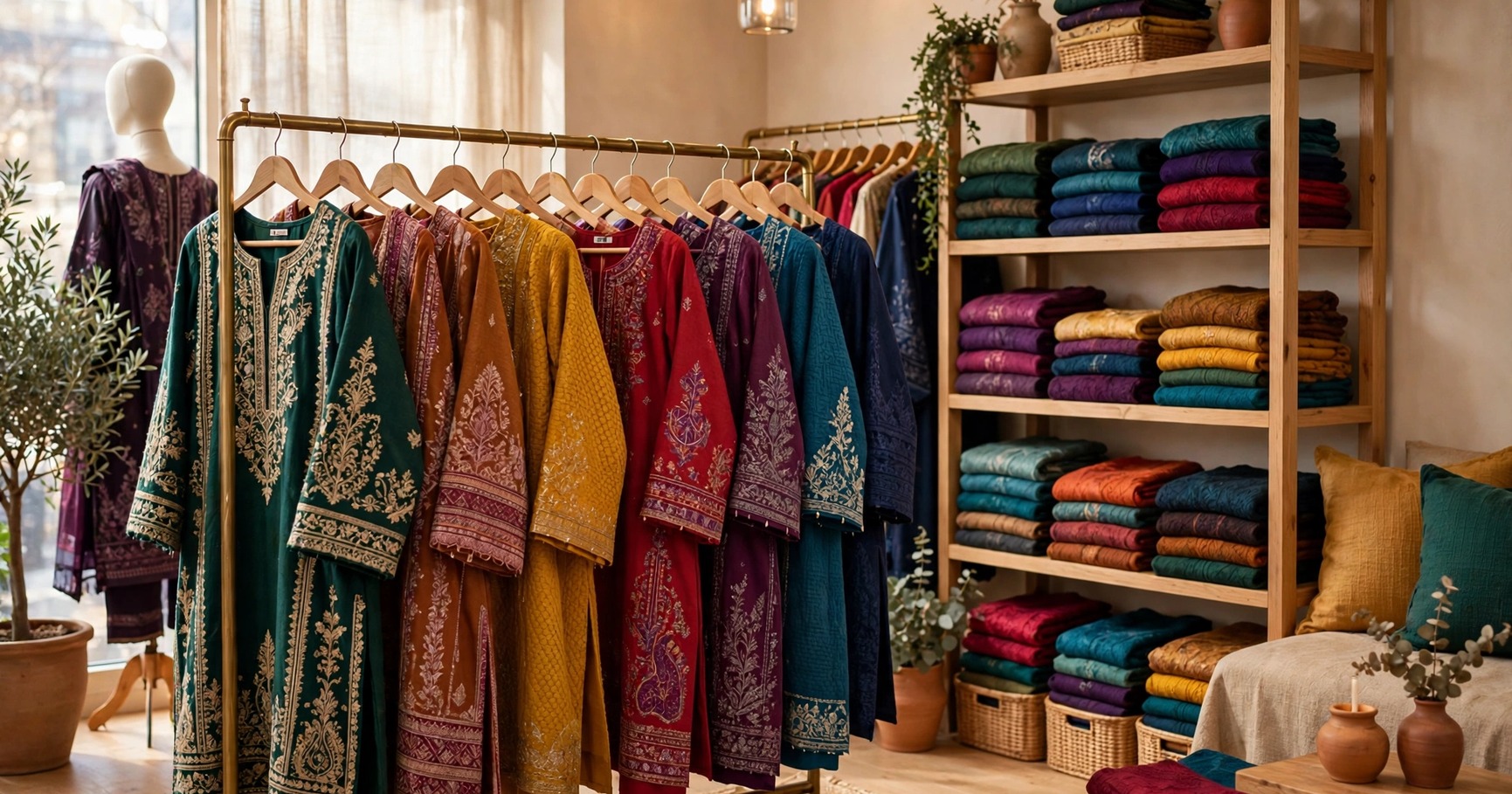
Picture this: it’s a Saturday afternoon, you’re standing in a mall with three shopping bags’ worth of decisions to make, and in front of you are three stores — Khaadi, Sapphire, and Gul Ahmed — all shouting about their winter collections. Same khaddar suits, same “new winter edit” banners, wildly different price tags. Which one actually deserves your money in 2026?
All three are giants of Pakistani fashion, but they are not interchangeable. They target different shoppers, price their winter lines differently, and each has real strengths and real trade-offs. This is the honest, no-sponsorship comparison.
Khaadi built its name on consistent, wearable everyday fashion, and its winter lines reflect that. The brand’s strength is breadth: from affordable unstitched khaddar and karandi to pricier embroidered ready-to-wear, there’s genuinely something at every budget level. Khaadi’s winter unstitched suits typically fall in the Rs. 3,000–6,000 range, with ready-to-wear going higher.
What shoppers consistently report: the prints are dependable, the fabric quality is predictable from purchase to purchase, and sizing in ready-to-wear is relatively consistent. The trade-off is that Khaadi rarely surprises — if you want cutting-edge silhouettes, you’ll find the designs safe. For building a practical winter wardrobe that just works, though, safe is a feature, not a bug. Check the latest prices at Khaadi’s official stores or on Daraz.
Sapphire positions itself a notch above on finish and design detail. Its winter collections lean into richer color palettes and more refined embroidery, and shoppers often describe the overall look as more “polished” than competitors at similar prices. Unstitched winter suits typically run Rs. 3,500–7,000 — slightly higher than Khaadi’s entry points.
The strength here is perceived quality: fabric hand-feel, print sharpness, and finishing details tend to impress. The trade-off is value at the top end — once you cross into Sapphire’s premium embroidered lines, you’re paying close to boutique prices, so compare carefully against what smaller labels offer. Sapphire also runs some of the most aggressive seasonal sales, which changes the math considerably (more on that below). Check the latest prices at Sapphire’s official stores or on Daraz.
Gul Ahmed’s superpower is range. Nobody else in this trio covers as much ground — from genuinely budget-friendly winter unstitched (often starting around Rs. 2,500–3,500) all the way to premium festive lines. If your budget is tight but you still want a recognized brand label, Gul Ahmed usually has an option.
Shoppers report that Gul Ahmed’s winter fabrics — particularly its khaddar and linen blends — offer strong value at the lower end. The trade-off is consistency: with such a wide range, quality varies more between lines than at Khaadi or Sapphire, so inspect the actual piece rather than trusting the brand name alone. Its winter fabric game is strongest in everyday wear rather than festive occasion wear. Check the latest prices at Gul Ahmed’s official stores or on Daraz.
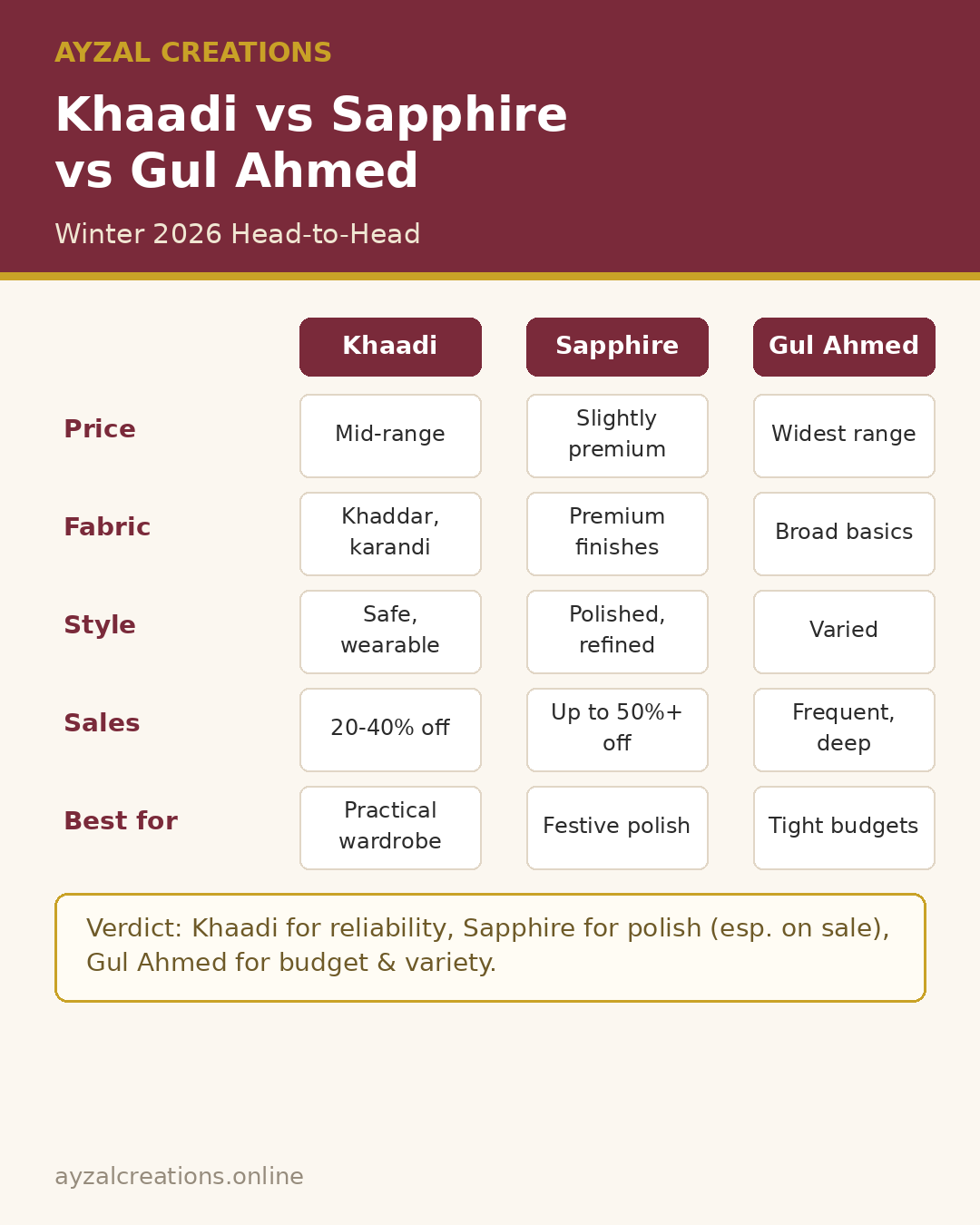
| Khaadi | Sapphire | Gul Ahmed | |
|---|---|---|---|
| Winter price positioning | Mid-range, Rs. 3,000–6,000 unstitched | Slightly premium, Rs. 3,500–7,000 unstitched | Widest, Rs. 2,500–6,500+ unstitched |
| Fabric focus | Khaddar, karandi, linen blends | Khaddar, karandi, premium finishes | Khaddar, linen, broad basics |
| Design style | Safe, wearable, consistent | Polished, refined, trend-aware | Varied — basics to festive |
| Ready-to-wear strength | Strong, consistent sizing | Strong, premium feel | Decent, varies by line |
| Sale discounts | Moderate (20–40%) | Aggressive (up to 50%+) | Frequent, deep on basics |
| Best for | Practical winter wardrobes | Polished everyday + festive | Tight budgets, variety seekers |
 Stitching Quality: What Shoppers Actually Report
For unstitched fabric, stitching is on you and your tailor — so compare fabric, not finishing. Across all three brands, shoppers generally report satisfactory fabric quality for the price, with the usual caveat: check each piece in hand. Common shopper advice that applies to all three: feel the fabric weight (winter khaddar should feel substantial), check print alignment at the seams on ready-to-wear, and wash one suit before judging — some deep dyes bleed initially regardless of brand.
For ready-to-wear, Khaadi gets the most consistent marks for predictable sizing, Sapphire for finishing details, and Gul Ahmed is more variable — its premium lines impress while entry lines can feel basic. None of this is a dealbreaker; it’s just worth knowing before you pay.
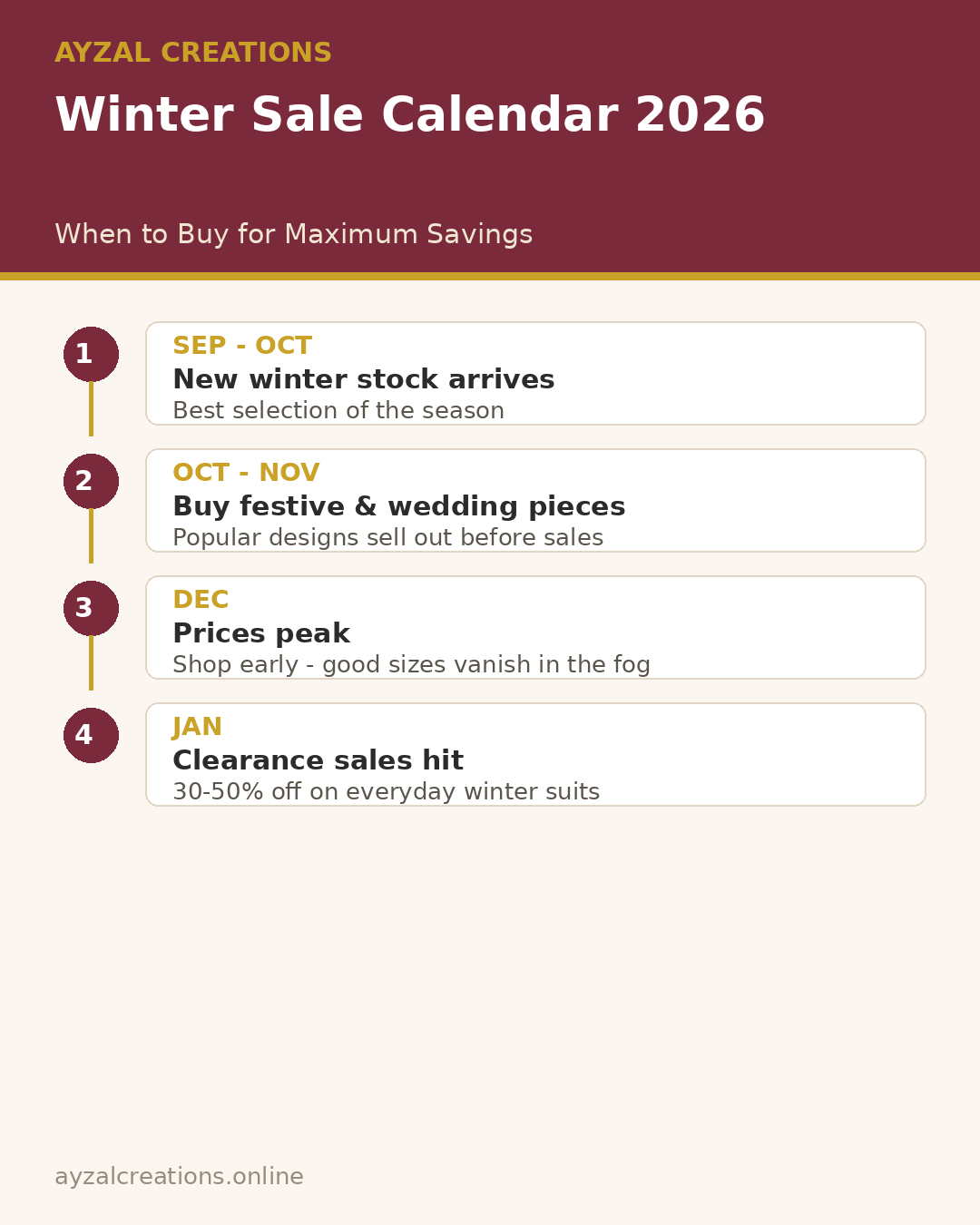
Timing matters enormously with these three. All run winter sales, but differently:
The practical takeaway: never pay full price in December if you can wait for January clearance — but buy wedding-season festive pieces early, because popular designs sell out before sales begin. For winter wedding guest looks from these brands, shop October–November.
 Who Should Buy Which: The Verdict
No single winner — the right brand is the one that matches your budget and your priorities this season.
All three use decent winter fabrics (khaddar, karandi, linen blends) at their price points. Sapphire generally gets the best marks for fabric hand-feel and finish, Khaadi for consistency across purchases, and Gul Ahmed for value at lower prices. The honest answer: feel the specific suit in the shop — fabric quality varies more by individual piece than by brand.
It depends on how you buy. At full price, the gap buys you more refined finishing and design detail — worth it for occasion wear, debatable for everyday suits. On sale (where Sapphire discounts aggressively), the gap often disappears entirely, making it the best value of the three for patient shoppers.
Sapphire’s premium embroidered lines and Khaadi’s festive ready-to-wear both work well — look for velvet accents, jewel tones, and refined embroidery. Gul Ahmed can work for budget wedding looks, but check the finishing in person. Our Pakistani wedding guest outfit guide has styling ideas that apply to pieces from any of these brands.
New winter stock arrives around September–October. Buy festive and wedding-season pieces in October–November before popular designs sell out. For everyday winter suits, wait for December–January sales — discounts of 30–50% are common, and the savings on 3–4 suits are significant.
Here’s the decision in one line: Khaadi for reliability, Sapphire for polish (especially on sale), Gul Ahmed for budget and variety. Most Pakistani women don’t need to pledge loyalty to one brand — the smartest winter wardrobe mixes them: everyday khaddar suits from wherever the sale is deepest, one or two polished festive pieces from Sapphire’s sale rack, and basics from Gul Ahmed. Shop with your actual budget and the season’s calendar in mind, not the banner outside the store, and you’ll dress well all winter without overspending.
The Ayzal Creations Editorial Team writes practical fashion and lifestyle guides for women and parents in Pakistan — from seasonal trends and modest style to kids’ fashion and everyday beauty. Every article is researched and written to help you look great and shop smart.